Garbage Disposal Installation: DIY vs. Hiring a Pro
Garbage disposal installation is one of the more approachable plumbing upgrades a homeowner can tackle, but “approachable” doesn’t mean risk free. Get the mounting assembly wrong or skip the electrical steps, and you’re looking at leaks under the sink or a tripped circuit breaker later that night. A professional installation typically runs $200 to $625, while a confident DIYer can often complete the job for as little as $75 in parts.
Homeowners across Fairfield County, Connecticut, and Westchester County, New York, weigh this decision regularly when an old unit finally fails. In older homes around Danbury, Ridgefield, and Wilton, corroded mounting hardware and outdated wiring can turn a simple swap into a bigger job. In Newtown, Brookfield, and New Milford, well systems and tighter cabinet access can also add time to the install.
If your project uncovers a P-trap that needs reconfiguring, a missing dedicated circuit, or a disposal that’s the wrong size for your home’s plumbing, All State Plumbing Pros can finish the job correctly the first time. Here’s what actually goes into a garbage disposal installation, what it costs, and how to know when it’s worth hiring a pro.
How Much Does Garbage Disposal Installation Cost?
A professional garbage disposal installation averages around $550 nationally, with most jobs falling between $200 and $625 depending on the unit and labor involved. Larger jobs, including premium units or difficult removals, can run $150 to $950.
Typical garbage disposal installation costs include:
| Item | Typical Cost Range |
| 1/3 to 1/2 HP unit | 50–225 |
| 5/8 to 3/4 HP unit | 120–310 |
| 1 to 1.25 HP unit | 200–400 |
| Batch-feed disposal | 75–300 |
| Continuous-feed disposal | 75–1,000 |
| Professional labor (per hour) | 50–100 |
| Old unit removal surcharge | 50–100 |
Feed type and material both affect price. A batch-feed unit typically costs less than a continuous-feed model of the same horsepower. Stainless steel units ($400 to 1,100)alsooutlastaluminumones(75 to $300), which corrode faster and rarely make it past 10 years.
Most professional installs take one to four hours. If the old unit is stubborn to remove or the mounting assembly is corroded, expect labor time, and cost, to run toward the higher end of that range.
Can I Install a Garbage Disposal by Myself?
If you’re comfortable with basic tools, yes. Plenty of homeowners install a garbage disposal themselves, especially when replacing an existing unit with a compatible new one. A skilled DIYer can complete the job for as little as $75 in parts, assuming you already own a wrench and a flathead screwdriver.
Can a homeowner install a garbage disposal with no plumbing background at all? Usually, as long as you’re swapping an existing unit rather than adding one where none existed before. Adding a disposal for the first time often means running new plumbing and a new electrical outlet, which raises the difficulty considerably and is a better fit for a licensed plumber.
Tools and Materials You’ll Need
Before you start, gather everything so you’re not mid-install and short a part:
- The new garbage disposal unit
- Plumber’s putty
- A flathead screwdriver
- A pipe wrench and channel-lock pliers
- Wire nuts for the electrical connection
- A hacksaw, if you need to cut the old drain line
- A hammer, in case the snap ring on the mounting assembly needs a firm tap to seat correctly
Read the installation manual before you touch a single screw. Every manufacturer’s mounting assembly is slightly different, and skipping this step is one of the most common reasons DIY installs go wrong.
Step-by-Step: Installing a New Garbage Disposal
This sequence follows the same general order outlined in This Old House’s installation guide, adapted for the models and mounting hardware most common today.
- Cut the power. Switch off the circuit breaker feeding the outlet, then confirm with an electrical tester before you touch any wires.
- Remove the old unit. Disconnect the P-trap, loosen the mounting ring, and twist the old disposal free. If you’re replacing a garbage disposal, the old snap ring is often corroded in place, so a light tap with a hammer usually frees it. Clean the sink surface of old putty once the unit is out.
- Set the sink flange. Roll a rope of plumber’s putty and press it around the underside of the sink flange, then insert it into the drain opening from above. Press down evenly so it seats flush against the sink opening.
- Build the mounting assembly. From below, slide the fiber gasket and backup flange onto the sink flange, then attach the mounting ring. Tighten the mounting screws evenly, alternating between them so the ring pulls snug against the sink surface.
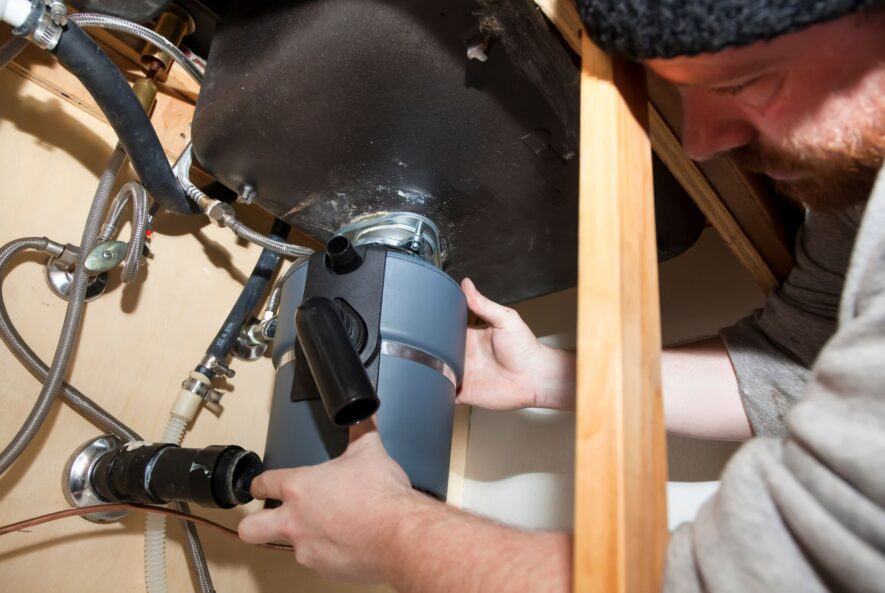
- Attach the disposal unit. Hold the new unit against the mounting assembly, line up the mounting tabs, and turn the lower mounting ring clockwise until the snap ring locks under the mounting flange. Some models need a screwdriver braced against the bracket, or a light tap of a hammer, to fully seat the ring.
- Connect the discharge tube. Align the discharge tube with the drain trap and secure it. For a dishwasher line, knock out the plastic access hole plug on the disposal inlet before you connect the dishwasher hose, and clamp it tight. A loose clamp is a common source of leaks.
- Wire it up. Strip the wires, match them by color, and join with wire nuts. Plug the unit into a GFCI-protected outlet, or hard-wire it per the manual.
- Test for leaks. Run water and cycle the garbage disposal. Check every connection, including the P-trap, the mounting ring, and the dishwasher hose, for drips.
The Electrical Detail Most DIYers Miss
Garbage disposals draw under 10 amps, but the National Electrical Code generally calls for a dedicated circuit rather than sharing one with other kitchen appliances. A standard 15-amp circuit covers most residential units. If there’s no dedicated outlet under your sink, that’s an electrician’s job, not a weekend project.
Common Installation Mistakes to Avoid
Even a straightforward garbage disposal installation goes wrong in predictable ways.
- Uneven putty or a crooked flange. If the sink flange isn’t pressed down evenly, the seal fails and water seeps out slowly, often unnoticed until it stains the cabinet below.
- Overtightened or undertightened mounting screws. Crank them down unevenly and you can crack the mounting ring. Leave them loose and the whole assembly wobbles.
- Forgetting the dishwasher knockout plug. If your model connects to a dishwasher and you skip removing the access hole plug, the dishwasher won’t drain properly, and you won’t find out until it backs up.
- Wiring without checking amperage. Not every existing outlet is rated for the new unit’s draw. Confirm the circuit before you plug in, not after.
- Skipping the leak test. A five-minute check with the water running catches most installation errors before they become a bigger repair.
How to Keep a New Garbage Disposal Running Longer
A properly installed unit typically lasts 8 to 15 years, with the International Association of Certified Home Inspectors putting the average closer to 12. A few habits go a long way toward hitting the higher end of that range.
- Run cold water for at least 15 seconds before and after each use. Cold water keeps grease solid so it grinds up and flushes out instead of coating the blades.
- Keep grease, coffee grounds, fibrous vegetables like celery and onion skins, and hard items like bones or fruit pits out of the disposal. These are the top causes of early failure.
- Run the unit every few days, even with nothing in it, to prevent internal rust and corrosion.
- Deep clean monthly with ice cubes and coarse salt, followed by baking soda and vinegar, to clear grease buildup under the splash guard.
- Never use chemical drain cleaners in a disposal. They corrode internal components and can void the manufacturer’s warranty.
- Add a quick disposal check to your seasonal home plumbing maintenance checklist so wear gets caught early instead of during a holiday dinner.
Watch for grinding noises, frequent clogs, lingering odors that don’t clear after cleaning, or a unit leaking from the housing itself rather than a loose connection. Those are signs it’s nearing the end of its life, not something to keep patching. If you’re already dealing with a clogged or jammed disposal rather than a clean install, that’s usually a sign the unit needs professional attention.
Is It Worth Getting a Garbage Disposal Installed by a Pro?
For a straightforward swap, meaning the same footprint, an existing outlet, and no plumbing surprises, a confident DIYer can usually handle it in an afternoon. It stops being worth the risk when the mounting assembly is corroded, the P-trap needs reconfiguring, or there’s no dedicated circuit in place.
A licensed plumber also catches problems you can’t: hidden pipe damage, a P-trap that’s the wrong size for code, or a garbage disposal that’s oversized for your home’s plumbing. For homeowners weighing overall repair budgets, it also helps to know what plumbing repairs typically cost beyond just the disposal itself.
Conclusion
Garbage disposal installation is a manageable DIY project for a straightforward swap, but the details matter. A crooked sink flange, an overtightened mounting ring, or a missing dedicated circuit can turn a $75 afternoon project into a repeat visit or a bigger repair. Knowing the real cost range, the correct mounting steps, and the point where a job is better handed off protects your kitchen, your plumbing, and your budget.
If you’d rather skip the guesswork, All State Plumbing Pros installs and replaces garbage disposals across Fairfield County and Westchester County, and gets the mounting, wiring, and leak testing right the first time. Our licensed plumbers also handle the residential plumbing work that often comes up alongside a disposal swap, from P-trap reconfigurations to new dedicated circuits. Contact us today to schedule a garbage disposal installation.
FAQs
How much does it cost for a garbage disposal installation?
Professional garbage disposal installation typically costs $200 to $625, with a national average around $550. DIY installation can cost as little as $75 in parts if you already own basic tools.
Can I install a garbage disposal by myself?
Yes, if you’re comfortable with basic tools and you’re replacing an existing unit with a compatible new one. Installs that require new plumbing or a new electrical outlet are better suited for a licensed plumber.
Can a homeowner install a garbage disposal?
Most homeowners can install a garbage disposal themselves when it’s a straightforward swap. Adding a disposal where none existed before usually requires new plumbing and wiring, which raises the difficulty and risk.
Is it worth getting a garbage disposal installed?
For most kitchens, yes. A garbage disposal reduces food waste going into the trash and helps prevent clogs from food scraps. Whether it’s worth a DIY install versus hiring a pro depends on your comfort with plumbing and electrical work and the condition of your existing setup.