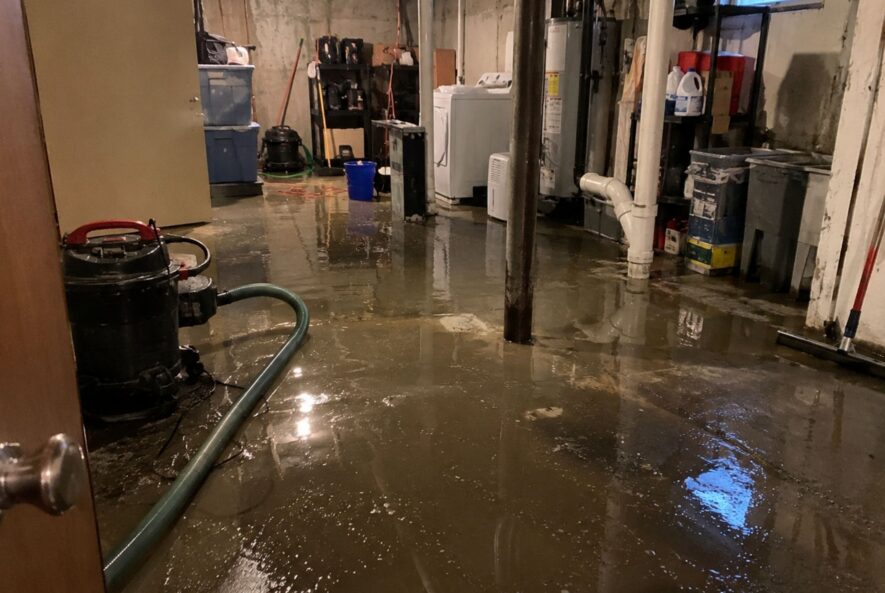
Sewer backup in the basement: first 30 minutes checklist
A sewer backup in the basement means wastewater is flowing backward into your home instead of out to the municipal sewer or septic system. The first 30 minutes after you spot it determine how much damage spreads and how much risk your household faces. The water is contaminated. The CDC classifies floodwater carrying human waste and other germs as a health hazard, so acting fast on shutoffs matters more than any cleanup step you take later.
Homeowners across Fairfield County, Connecticut, and Westchester County, New York, deal with this problem more often during heavy storms. Older clay and cast iron sewer pipes shift with freeze-thaw cycles, and they get invaded by tree roots as they age. Towns including Danbury, New Milford, Ridgefield, Wilton, and Bethel share that same mix of aging infrastructure and tree-lined streets. In our experience, a basement backup is rarely a one-time fluke. It is usually a signal that something further down the main sewer line needs attention.
Every minute a backup sits untreated, more sewage water soaks into drywall, flooring, and anything stored on the basement floor, and the cleanup bill grows with it. All State Plumbing Pros answers emergency plumber calls around the clock. If you are mid-backup right now, the checklist below gets you through the first half hour safely while help is on the way.
Why the first 30 minutes matter
Sewage backing up into a basement is not ordinary water damage. It is classified as black water, meaning it may carry harmful bacteria, viruses, and parasites from human waste and grease. Sewer gas, including hydrogen sulfide, can also build up and cause breathing difficulty in an enclosed basement. The CDC specifically warns against contacting water contaminated with sewage, and that caution applies to wading through a flooded basement without protection. Standing sewage spreads fast, too: it wicks into drywall, soaks into carpet pads, and seeps under baseboards within the first half hour in many cases, and any outlets, a furnace, or a water heater sitting in its path create a serious shock and fire risk.
The first 30 minutes come down to three priorities, in order: keep people safe, stop the source from adding more water, then contain what has already come in. Cleanup, sanitizing, insurance calls, and diagnosing the plumbing issue come after, once the immediate hazard is controlled.
Step by step: the first 30 minutes
Work through these steps in order. Do not skip the safety steps to start cleaning, even if the basement floor looks only lightly wet.
- Keep everyone, including pets, out of the affected area. Sewage contact with skin, eyes, or open cuts can cause infection.
- If outlets, a furnace, or an electrical panel sit in or near the water, do not enter the space. Shut off power to that section from the main panel if you can reach it without stepping into water. If the panel is wet or you are unsure, leave power on and call a professional plumber instead of risking shock.
- Locate your main water shutoff valve and close it. This stops fresh water from entering the house and adding to what is already backing up.
- Stop using every sink, toilet, washing machine, and shower in the house. Each flush or drain cycle pushes more sewage back into the basement floor drain.
- If you know where your sewer cleanout is located, do not open it yourself during an active backup. Opening it under pressure can cause sewage to spray out forcefully.
- Put on rubber boots and rubber gloves if you need to move through or near the water. This matches the protective gear the CDC recommends for contact with contaminated floodwater.
- Move anything you can safely reach, such as boxes or stored items, up out of the water’s path. Do this only from dry ground, without wading in.
- Call a licensed plumber who handles emergency sewer backups so multiple drains are usable again sooner. We get calls about this constantly during spring thaw and after heavy summer storms, so you are far from the only homeowner dealing with it tonight.
What not to do during a backup
A few instinctive reactions actually make a sewer backup worse. Do not run any water in the house, including laundry, dishwashers, or showers, until the blockage is cleared, since every drain shares the same backed-up line. Do not flush toilets to try to clear the problem, and do not pour bleach or chemical drain cleaners into any fixture, since neither resolves a main line blockage and both can create fumes. Skip a standard wet/dry vacuum, which is not rated for sewage, and never enter standing water near an active electrical source, even to retrieve something valuable. A shop towel and disinfectant spray are not enough afterward either: carpet and drywall that stayed wet usually need to be removed, not just cleaned.
What causes a sewer backup in a basement
The most common cause is a blockage in the main sewer line, the single pipe that carries wastewater from the entire home to the city sewer or septic system. When it is blocked, sewage has nowhere to go but back up through the lowest drains in the house, usually a basement floor drain or a utility sink drain. Tree roots are one of the most frequent culprits, especially near mature trees and aging clay or cast iron pipes: roots sense moisture through hairline cracks in old joints, grow into the pipe, and slowly form a net that traps debris. Grease, food scraps, paper towels, and other non-degradable items poured down a kitchen sink build up the same way over time, since toilet paper is the only paper product designed to break down. Aging clay or cast iron lines are also more prone to cracking or settling than modern PVC, which shows up most often in the older neighborhoods around Danbury and Ridgefield. Heavy storms add a third path, overwhelming the municipal sanitary sewer faster than it can drain and pushing city sewer water back into homes along the line.
Common signs the problem is a main line, not one fixture
How the backup shows up tells you where the blockage likely sits.
| Signs you see | What it likely means |
| Only one drain or toilet is slow or backing up, others work fine | Localized clog in that fixture’s branch line |
| Multiple drains back up at the same time, or the toilet bubbles when you run a sink | Main sewer line blockage affecting the whole house |
| Sewage backs up into the lowest basement floor drain first | Classic main line symptom, since the lowest point drains last |
| Gurgling sounds from drains when nothing is running | Trapped air caused by a blockage further down the line |
| Standing water pooling around floor drains after normal use | Common sign of a developing sewer line issue |
If more than one fixture is affected, or sewer water is coming up through a basement floor drain, treat it as a main line issue and stop using water throughout the house until it is diagnosed. For more on how these clogs form, including tree root intrusion in older neighborhoods, see our guide to main sewer line clog warning signs and our article on tree roots in sewer lines.
When to call a professional immediately
Some situations do not leave room to wait and see. Call a licensed plumber right away if any of the following apply:
- Sewage is actively coming up through a floor drain, toilet, or basement fixture and has not stopped.
- Multiple drains in the house are affected at the same time.
- You smell persistent sewer gas, which can indicate a larger plumbing issue beyond a simple clog. Our piece on what causes sewer gas smell in a house explains more.
- The backup keeps recurring every few weeks or months, suggesting a structural issue like a collapsed pipe or significant root intrusion.
- You are not confident the electrical panel or outlets near the water are safe to approach.
- You have a septic system, and the backup coincides with slow drainage across the whole house. That combination can point to a failing septic system rather than a municipal sewer issue.
A same-day inspection, ideally with a video camera run through the line, identifies the real problem: a clog, root intrusion, a collapsed section of pipe, or even an illegal connection draining into the line. Professional plumbing services typically use video cameras for accurate diagnostics rather than guessing from symptoms alone. Our sewer line inspection page explains what that process involves.
Cleaning up and sanitizing a basement after a sewer backup
Once the water source is stopped and the area is safe, cleanup and sanitizing come next. Treat sewage backup as hazardous, not an ordinary spill, since it can carry harmful bacteria, parasites, and viruses.
Removing sewage and contaminated materials
Wear rubber gloves, boots, and a mask before touching anything in the area. Remove standing water with a wet/dry vacuum rated for sewage, since a standard shop vacuum isn’t built for raw sewage. Porous materials that absorbed sewage, including carpet, padding, drywall, insulation, and upholstered furniture, generally cannot be cleaned and need to be disposed of as hazardous material. Bag contaminated debris separately and check local disposal rules.
Disinfecting and drying out
Scrub hard, non-porous surfaces such as concrete and tile with a bleach solution or an EPA-registered disinfectant, following the product’s dilution instructions. Rinse and let surfaces air dry with windows open and fans aimed away from the cleaned area. Drying affected areas within 24 to 48 hours matters for preventing mold, per the CDC’s guide to mold cleanup after flooding. One thing we always tell homeowners: a restoration company is worth the cost when multiple fixtures were affected, since DIY drying rarely keeps pace with a basement that large.
Health risks of a sewage backup in the basement
Sewage backup is more than an unpleasant mess. Raw sewage carries harmful bacteria, viruses, and parasites from human waste. Exposure has been associated with illnesses such as E. coli infection and hepatitis A, along with gastrointestinal symptoms from touching contaminated surfaces. Children and anyone with a weakened immune system face elevated health risks, so keep them away from the affected area entirely.
Sewer gas trapped in standing sewage water, including hydrogen sulfide, can cause headaches, nausea, and breathing difficulties in an enclosed basement, particularly if ventilation is poor. A persistent unpleasant odor after a backup can mean contamination is still present even once the visible water is gone, and it needs further attention. If anyone develops symptoms such as fever, vomiting, or skin irritation after contact with sewage water, seek medical treatment and mention the exposure.
Insurance for sewer backups
Standard homeowners insurance often does not cover sewer backup damage. Many policies treat it like flood damage and exclude it by default. Sewer backup coverage is usually available as a separate endorsement that can be added to an existing policy for a relatively small premium, and it is worth asking your insurance agent about it even if you have never had a backup before. Property owners are typically responsible for maintaining the sewer lateral, the pipe connecting the home to the main sewer. That is why tree root intrusion or a collapsed lateral is usually the homeowner’s repair cost rather than the municipality’s.
If you file a claim, document everything before cleanup begins. Photograph standing water lines and damaged flooring, and keep an itemized list of affected property, since insurers generally require that documentation. For more, see our article on does homeowners insurance cover sewer line replacement.
Preventing future sewer backups
A few proactive measures reduce the odds of a repeat basement backup. Installing a backwater valve on your main sewer line is one of the most effective: it lets sewage flow out normally but closes automatically if the city sewer tries to push water back. Scheduling a sewer line inspection once a year catches a developing clog or early root intrusion before it becomes an emergency, and keeping sump pumps tested with a working battery backup closes off another common cause of basement water problems.
Smaller habits help too. Drain strainers in kitchen sinks and basement drains catch food scraps before they reach the sewer pipes, and nothing but toilet paper should ever go down a drain, since it is the only paper product designed to break down. If you are planting trees near your sewer lateral, choose species with less aggressive roots, and ask a plumber about root barriers for any mature tree already close to the line. Routine hydro-jetting, which clears buildup using water pressure up to roughly 4,000 PSI without harsh chemicals, also helps keep older pipes clear between inspections.
Conclusion
A sewer backup in the basement is a plumbing emergency and a contamination hazard at the same time. That is why the order of operations matters: protect people first, stop adding water second, then contain and sanitize the mess. Diagnosis and major cleanup come last, and that part is best left to a professional. The difference between a contained, manageable backup and a basement that needs major restoration work often comes down to what happens in that first half hour, and how well the underlying main sewer line issue gets fixed afterward matters just as much.
All State Plumbing Pros answers emergency calls 24/7 across Fairfield County, Connecticut, and Westchester County, New York. A technician can walk you through shutoff steps over the phone while en route, then follow up with a camera inspection to diagnose the real plumbing issue. If sewage is backing up into your basement right now, contact us or visit our homepage. A licensed plumber can get your line diagnosed and cleared the same day.
FAQs
What should I do if the sewer backs up in my basement?
Keep people and pets away from the water. Shut off the main water valve, stop using every drain, and call a licensed plumber once the area is safe.
How do you sanitize a basement after a sewer backup?
Wear gloves, boots, and a mask. Remove standing water, dispose of soaked porous materials, and disinfect hard surfaces with bleach. Dry everything within 24 to 48 hours.
What are the health risks of a sewage backup in the basement?
Raw sewage carries bacteria and viruses that can cause illnesses like E. coli or hepatitis A. Sewer gases can also cause headaches and breathing trouble.
What is the most common cause of a sewer backup?
A blocked main sewer line, usually from tree roots, grease buildup, or heavy storms overwhelming the system. A camera inspection confirms the exact cause.
Is it safe to clean up a sewer backup myself?
Minor splashes are fine with gloves and disinfectant. Sewage soaked into carpet or drywall generally needs professional remediation.
Can I flush the toilet during a sewer backup?
No. It adds water to a line that already can’t drain, pushing sewage further into the basement. Stop using every drain until the blockage clears.
Who do I call for a sewer backup, the city or a plumber?
A backup affecting only your home points to your private line and calls for a plumber. Some municipalities also take reports for public sewer issues.