Winter well pump problems: why wells fail in cold weather
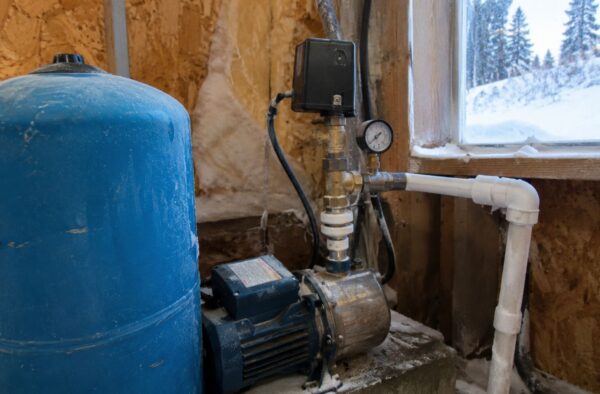
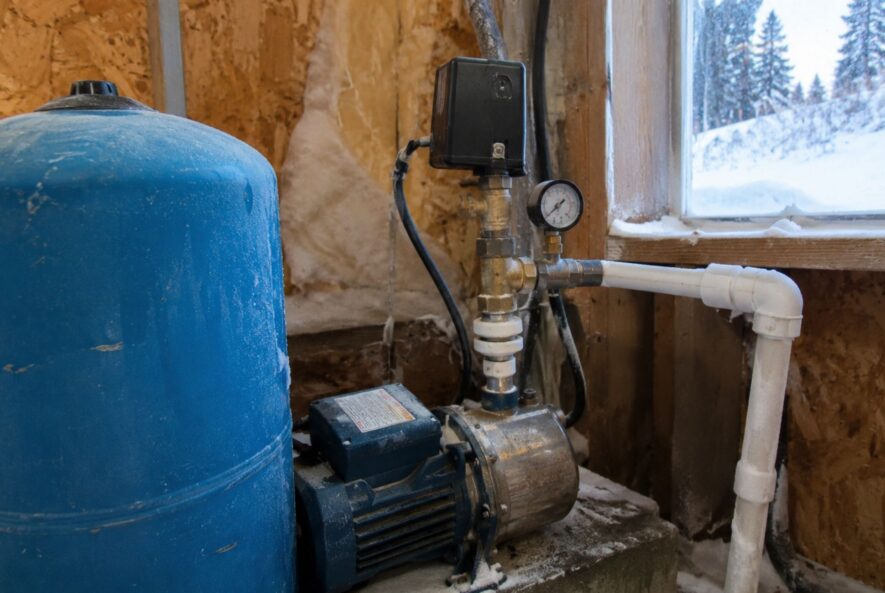
Many well pump winter problems start above ground, away from the pump itself. In a well with a submersible pump, the pump sits deep in the well, below the depth where the ground freezes. What freezes is closer to the surface: the small tube that feeds the pressure switch, exposed pipes, a pressure tank in a cold corner, and the wellhead. Winter storms add a second problem, because a well pump can’t run without power.
Homes from Danbury and Bethel up through Brookfield and Newtown run on private wells, and our New Milford plumbing customers face the same risk. Older houses often keep the tank or pump in a crawl space or small outbuilding that was never meant to stay warm in January.
If your water stopped after a cold night, start with a few safe checks. They can tell you whether it’s a frozen line or a failing part, and the All State Plumbing Pros well pump repair and replacement team handles pressure switches, tanks, and wiring across the region.
Why do well pumps have trouble in cold weather?
Well systems have trouble in cold weather because some components sit above the frost line, where freezing temperatures can reach them, and ice can form. Water in a short, thin pipe freezes first, so the pressure switch tube is a common trouble spot. Cold also exposes system parts that were already weak, like a tank that has lost its air charge and keeps the pump short cycling. For general causes, see our guide to a well pump not working.
Frozen pressure switch and water lines
A frozen pressure switch is a common reason a well home loses its water supply on a very cold night. The switch reads pressure through a short nipple at the tank tee. The Water Systems Council’s sheet on protecting your pipes and well system from freezing flags that 1/4-inch by 3-inch nipple as a common freeze point. When ice blocks it, the switch never sees the pressure drop, so the pump never turns on. When we get a no-water call during a cold snap, this tube is one of the first places we look.
Water lines can also freeze in an unheated well house, a crawl space, or a buried run that’s too shallow. Underground, the line usually connects at a pitless adapter, which the Water Systems Council says attaches to the well casing below the frost line. Trouble shows up where pipe comes back above that depth, so look for frost, a bulge, or cracks. Work on the wellhead or pitless adapter goes to a licensed well contractor.
Should a well pump house be insulated?
Yes. The Water Systems Council says an above-ground pump should stay where the temperature holds above 40°F, and below 32°F it belongs in an insulated enclosure. The same sheet says water tanks are vulnerable to freezing too, so the tank belongs inside that insulated space. Jet pumps are the usual above-ground type, since Angi notes they are mounted above the well while submersibles sit inside it. In our experience, a drafty door or bare floor is often what lets a well house freeze in a hard cold snap.
Winter power outages and well pumps
A well pump runs on electricity, so a storm that knocks out power also cuts off your water. You may get a bit of water from what’s left in the pressure tank, then the tap runs dry. Once power returns, check that the pump starts and the pressure builds. If it doesn’t, shut off the pump breaker and call a professional instead of resetting it over and over. We get a lot of generator questions, and a licensed electrician should do that hookup.
What to check when the water stops in winter
Start with simple checks, and leave the pressure switch cover and wiring alone, since that’s live electrical work.
- Check other faucets. If one trickles and the rest run normally, a single branch line is likely frozen.
- Check the well pump breaker. Reset a tripped breaker once. If it trips again, leave it off.
- Look at the pressure gauge near the tank. A reading near zero with the pump silent points to the switch or power.
- Inspect the tank piping, the switch tube, and exposed pipes for frost or bulging.
- Before you thaw anything, turn off the pump breaker. The Water Systems Council says to keep it off until the switch tube has warmed up and works again.
Never use an open flame to thaw a well line. The Water Systems Council lists gentle heat sources: an electric heating pad, a hair dryer, or a portable space heater kept away from flammable materials. If a jet pump needs to prime again once the lines thaw, our guide to priming a well pump walks through it.
How to winterize your well system
The best way to winterize a well is to protect every part that sits above the frost line before the season turns. Most of it is simple fall maintenance.
- Wrap the pressure switch nipple and exposed pipes with foam insulation or pipe covers.
- Keep a well house or pump enclosure above 40°F with a safe heat source.
- Shut off and drain outdoor faucets so no water sits in those lines.
- Clear snow and debris from around the wellhead, and mark it so plows and snow blowers stay away.
- Let a faucet drip during a hard cold spell.
- Have a plumber inspect the pump, switch, and tank before winter.
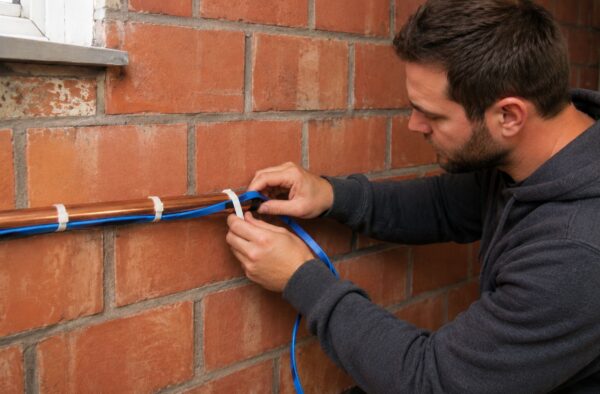
Heat tape can help on vulnerable pipes when it’s installed per the manufacturer’s instructions. If you winterize a seasonal home, a plumber can drain the plumbing and restore it in spring.
Is your well pump going bad, or just frozen?
A frozen line usually comes back once it thaws, while a failing pump shows warning signs in summer as well as winter. Signs to notice include weak pressure, sputtering taps, a pump that runs nonstop or cycles constantly, and new noises. Our article on the signs of well pump failure covers them in detail. If replacement is on the table, Angi puts the average cost to replace a well pump at $1,899, with most homeowners spending $975 to $2,824 depending on pump type and size. Our well pump replacement cost guide breaks down what affects the price.
Conclusion
In winter, well trouble often starts above ground: a frozen pressure switch tube, an exposed line, an unprotected tank or jet pump, or a storm that cuts the power. A few safe checks usually tell you which one it is. If you winterize the system each fall, you can head off much of it.
If your well has stopped working in the cold, All State Plumbing Pros offers 24/7 emergency service for no-water calls. We also repair and replace well pumps, service pressure switches and tanks, and install constant-pressure systems. Every visit is handled by a licensed, insured plumber. Call (203) 456-3636 or book a well service visit online, and see everything else we do on our website.
Frequently Asked Questions
At what temperature does a well pump freeze?
Water freezes at 32°F, but a submersible pump below the frost line stays protected. The Water Systems Council says above-ground pumps should be kept where it stays above 40°F.
How much does it cost to replace a well pump?
Angi puts the average cost to replace a well pump at $1,899. Most homeowners spend $975 to $2,824, depending on the pump type and size.
How do you know your well pump is going bad?
Common signs are weak or sputtering water pressure, a pump that runs nonstop or cycles on and off, and new noises from the pump or tank.
Will a well pump work during a power outage?
No, not without backup power. Well pumps run on electricity, so you only have what's left in the pressure tank until power returns or a generator is connected.
Many well pump winter problems start above ground, away from the pump itself. In a well with a submersible pump, the pump sits deep in the well, below the depth where the ground freezes. What freezes is closer to the surface: the small tube that feeds the pressure switch, exposed pipes, a pressure tank in a cold corner, and the wellhead. Winter storms add a second problem, because a well pump can't run without power.
Homes from Danbury and Bethel up through Brookfield and Newtown run on private wells, and our New Milford plumbing customers face the same risk. Older houses often keep the tank or pump in a crawl space or small outbuilding that was never meant to stay warm in January.
If your water stopped after a cold night, start with a few safe checks. They can tell you whether it's a frozen line or a failing part, and the All State Plumbing Pros well pump repair and replacement team handles pressure switches, tanks, and wiring across the region.
Why do well pumps have trouble in cold weather?
Well systems have trouble in cold weather because some components sit above the frost line, where freezing temperatures can reach them, and ice can form. Water in a short, thin pipe freezes first, so the pressure switch tube is a common trouble spot. Cold also exposes system parts that were already weak, like a tank that has lost its air charge and keeps the pump short cycling. For general causes, see our guide to a well pump not working.
Frozen pressure switch and water lines
A frozen pressure switch is a common reason a well home loses its water supply on a very cold night. The switch reads pressure through a short nipple at the tank tee. The Water Systems Council’s sheet on protecting your pipes and well system from freezing flags that 1/4-inch by 3-inch nipple as a common freeze point. When ice blocks it, the switch never sees the pressure drop, so the pump never turns on. When we get a no-water call during a cold snap, this tube is one of the first places we look.
Water lines can also freeze in an unheated well house, a crawl space, or a buried run that’s too shallow. Underground, the line usually connects at a pitless adapter, which the Water Systems Council says attaches to the well casing below the frost line. Trouble shows up where pipe comes back above that depth, so look for frost, a bulge, or cracks. Work on the wellhead or pitless adapter goes to a licensed well contractor.
Should a well pump house be insulated?
Yes. The Water Systems Council says an above-ground pump should stay where the temperature holds above 40°F, and below 32°F it belongs in an insulated enclosure. The same sheet says water tanks are vulnerable to freezing too, so the tank belongs inside that insulated space. Jet pumps are the usual above-ground type, since Angi notes they are mounted above the well while submersibles sit inside it. In our experience, a drafty door or bare floor is often what lets a well house freeze in a hard cold snap.
Winter power outages and well pumps
A well pump runs on electricity, so a storm that knocks out power also cuts off your water. You may get a bit of water from what’s left in the pressure tank, then the tap runs dry. Once power returns, check that the pump starts and the pressure builds. If it doesn’t, shut off the pump breaker and call a professional instead of resetting it over and over. We get a lot of generator questions, and a licensed electrician should do that hookup.
What to check when the water stops in winter
Start with simple checks, and leave the pressure switch cover and wiring alone, since that’s live electrical work.
- Check other faucets. If one trickles and the rest run normally, a single branch line is likely frozen.
- Check the well pump breaker. Reset a tripped breaker once. If it trips again, leave it off.
- Look at the pressure gauge near the tank. A reading near zero with the pump silent points to the switch or power.
- Inspect the tank piping, the switch tube, and exposed pipes for frost or bulging.
- Before you thaw anything, turn off the pump breaker. The Water Systems Council says to keep it off until the switch tube has warmed up and works again.
Never use an open flame to thaw a well line. The Water Systems Council lists gentle heat sources: an electric heating pad, a hair dryer, or a portable space heater kept away from flammable materials. If a jet pump needs to prime again once the lines thaw, our guide to priming a well pump walks through it.
How to winterize your well system
The best way to winterize a well is to protect every part that sits above the frost line before the season turns. Most of it is simple fall maintenance.
- Wrap the pressure switch nipple and exposed pipes with foam insulation or pipe covers.
- Keep a well house or pump enclosure above 40°F with a safe heat source.
- Shut off and drain outdoor faucets so no water sits in those lines.
- Clear snow and debris from around the wellhead, and mark it so plows and snow blowers stay away.
- Let a faucet drip during a hard cold spell.
- Have a plumber inspect the pump, switch, and tank before winter.
Heat tape can help on vulnerable pipes when it’s installed per the manufacturer’s instructions. If you winterize a seasonal home, a plumber can drain the plumbing and restore it in spring.
Is your well pump going bad, or just frozen?
A frozen line usually comes back once it thaws, while a failing pump shows warning signs in summer as well as winter. Signs to notice include weak pressure, sputtering taps, a pump that runs nonstop or cycles constantly, and new noises. Our article on the signs of well pump failure covers them in detail. If replacement is on the table, Angi puts the average cost to replace a well pump at $1,899, with most homeowners spending $975 to $2,824 depending on pump type and size. Our well pump replacement cost guide breaks down what affects the price.
Conclusion
In winter, well trouble often starts above ground: a frozen pressure switch tube, an exposed line, an unprotected tank or jet pump, or a storm that cuts the power. A few safe checks usually tell you which one it is. If you winterize the system each fall, you can head off much of it.
If your well has stopped working in the cold, All State Plumbing Pros offers 24/7 emergency service for no-water calls. We also repair and replace well pumps, service pressure switches and tanks, and install constant-pressure systems. Every visit is handled by a licensed, insured plumber. Call (203) 456-3636 or book a well service visit online, and see everything else we do on our website.
FAQs
At what temperature does a well pump freeze?
Water freezes at 32°F, but a submersible pump below the frost line stays protected. The Water Systems Council says above-ground pumps should be kept where it stays above 40°F.
How much does it cost to replace a well pump?
Angi puts the average cost to replace a well pump at $1,899. Most homeowners spend $975 to $2,824, depending on the pump type and size.
How do you know your well pump is going bad?
Common signs are weak or sputtering water pressure, a pump that runs nonstop or cycles on and off, and new noises from the pump or tank.
Will a well pump work during a power outage?
No, not without backup power. Well pumps run on electricity, so you only have what’s left in the pressure tank until power returns or a generator is connected.