Space heater vs. heat tape: protecting vulnerable pipes
For one stretch of pipe that keeps getting too cold, heat tape for pipes is usually the better long-term fix. A space heater warms the air in a room, and someone has to watch it the whole time it runs. Both are electric heat sources, so both carry a fire risk if they’re installed or used the wrong way.
Around Fairfield County, CT, and Westchester County, NY, the heat tape question comes up most in additions, finished garages, and older homes in Danbury, Bethel, Brookfield, and New Milford, where plumbing often went wherever it fit.
A pipe that has frozen once will probably freeze again unless something changes. All State Plumbing Pros can help you decide whether a cold pipe needs heat, insulation, or a new route as part of our residential plumbing service.
Heat tape vs. space heater at a glance
Heat tape is designed to guard one pipe all season, while a space heater only helps while you’re in the room to watch it.
| Factor | Heat tape or heat cable | Portable space heater |
| Best fit | Crawl spaces, garages, exterior walls, pipes that freeze repeatedly | A short cold spell in a room you’re using |
| Unattended use | Designed for steady seasonal use when installed per the instructions | No. Turn it off when you leave the room or go to bed |
| Main fire risks | Damaged or worn tape, foam, or vinyl insulation over it; tape wrapped over itself | Anything that can burn within 3 feet, extension cords, leaving it running |
| Power needs | Grounded 3-prong outlet with GFCI protection | Plugged straight into a wall outlet |
What is heat tape?
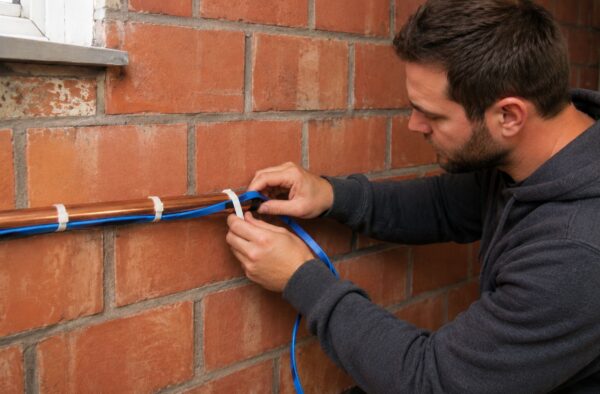
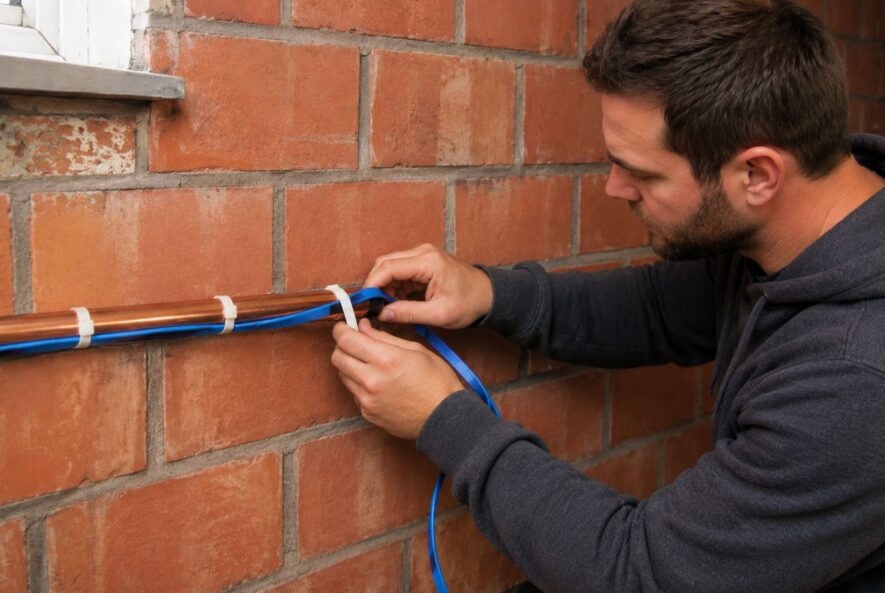
Heat tape is an electric heating element designed to prevent pipes from freezing. It attaches directly to the pipe and is also sold as heat cable. It works by electrical resistance, turning electricity into heat right at the pipe, so it needs an outlet within reach. The American Red Cross recommends UL-listed heat tape for exposed pipes.
Self-regulating vs. constant-wattage heat cable
Self-regulating cable adjusts its own heat output as the temperature changes, while constant-wattage cable puts out the same heat all the time. A self-regulating cable has a conductive core that conducts more in the cold, so it gives off more heat as the pipe cools. For constant-wattage cable, one manufacturer’s built-in thermostat turns it on below 37.4°F and off once the pipe warms to about 50°F. Products aren’t interchangeable, so select one that’s suitable for your pipe.
How to use heat tape safely
Heat tape is safe when it’s certified, installed exactly as its instructions say, and checked every year. The CPSC heat tape guidelines from the US Consumer Product Safety Commission come down to a short checklist.
- Use heat tape certified to Underwriters Laboratories (UL) safety standards.
- Plug the 3-prong plug into a grounded 3-prong outlet protected by a GFCI.
- Put the tape directly on the pipe, never on top of the pipe insulation.
- Don’t wrap the tape over itself unless the instructions permit it.
- Cover it with insulation only if the manufacturer says to. Then use non-flammable insulation such as fiberglass, not foam or vinyl.
- Keep the end cap sealed and off the ground so water can’t get in.
- Never use heat tape made for water pipes on gutters, driveways, or fuel lines.
Instructions differ by product, so read them before installation. One manufacturer’s sheet says its cable is for metal water pipes only and must never be covered with thermal insulation. Another allows no more than 1/2 inch of fiberglass or other non-flammable insulation over its cable. Both warn that a cable made shorter will overheat.
How often should you inspect heat tape?
Inspect heat tape every year before freezing weather, and replace it when it shows wear. The CPSC says to look for discolored surfaces (especially at the plug), charring, cuts or breaks in the insulation, and bare wires. It also recommends replacing uncertified heat tape more than 3 years old with certified tape. A question we hear every winter is whether an old tape with no readable label is still okay. We treat it as due for replacement, since nobody can confirm how it was rated.
When does a space heater make sense?
A space heater makes sense for a short cold spell in a room where you’ll be the whole time, like a chilly kitchen with the sink on an outside wall. The Red Cross also lists one, kept away from flammable materials, as a way to thaw a frozen pipe. Our frozen pipe prevention tips cover the basics. It’s a poor fit for a crawl space, garage, or empty house, where it would run for days with no one around.
Space heater safety rules for cold pipes
Keep anything that can burn at least 3 feet from a space heater. Turn it off when you leave the room or go to bed. Both rules come from the US Fire Administration’s heating fire safety guidance, which also warns against extension cords on appliances. The USFA reports that heating fires were the second leading cause of home fires in 2021. Portable heaters were only 3% of home heating fires from 2017 to 2019, yet they accounted for 41% of fatal heating fires.
What’s better than heat tape?
For many pipes, insulation and air sealing are better than heat tape, because they protect the pipe without using any energy. If a pipe still freezes, the permanent fix is often rerouting it into heated space. The Red Cross recommends adding insulation to attics, basements, and crawl spaces, plus pipe sleeves. We find that a pipe that freezes in the same spot each year often sits next to a draft. Seal that first, then decide whether heat tape is still needed. Our guide to winterizing your home’s plumbing covers the rest of the house.
Where are the most vulnerable pipes in local homes?
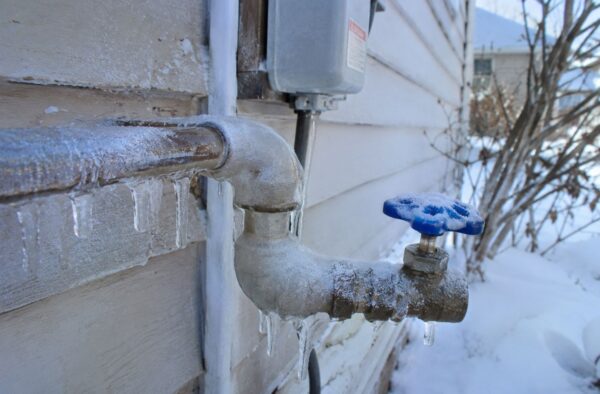
The most vulnerable pipes are the ones cold air can reach. The Red Cross singles out pipes in unheated spaces and pipes that run along exterior walls with little or no insulation. If a cold snap leaves a well home with no water, our well pump service team handles no-water calls.
When to call a plumber or an electrician
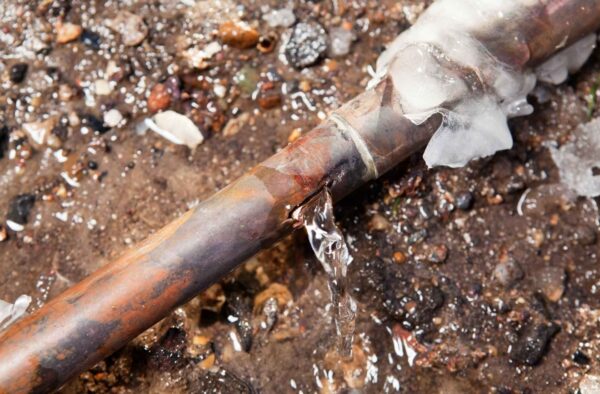
Call a plumber when a pipe keeps freezing after you’ve insulated it, when you can’t reach it, or when it should move somewhere warmer. Rerouting a supply line off an exterior wall or out of a crawl space is a plumbing job. Call a licensed electrician if there’s no GFCI-protected outlet near the pipe. Adding an outlet or circuit is electrical work. If a pipe has already split, our guide to repairing a burst pipe explains what to do next.
Conclusion
Heat tape is the better long-term choice for a specific pipe that freezes, provided you follow the CPSC basics and the product’s own instructions. A space heater is a short-term tool that needs 3 feet of clearance and your full attention. Either way, insulation and sealing drafts come first.
If a pipe in your home keeps freezing, All State Plumbing Pros can help you choose between insulation, heat tape, and a new route. Our licensed, insured plumbers handle residential repairs, repiping, well pump service, and 24/7 emergency service. Reach us at (203) 456-3636 or through the contact form, and find the rest of our services on our homepage.
Frequently Asked Questions
Can you leave heat tape plugged in all the time?
It depends on the product, so follow the manufacturer's instructions. Self-regulating cable adjusts its own output, some plug-in cables have a built-in thermostat, and every type should be inspected each year.
How long can pipes stay frozen before bursting?
There's no set time, and waiting only adds risk. Thaw a frozen pipe promptly with gentle heat and the faucet open, and never use an open flame.
Can you put heat tape on PVC drain pipe?
Generally no. One manufacturer says its pipe heat cables aren't for drain lines or PVC pipe, and another says its cable is for metal water pipes only. Check your product's label.
Should you insulate over heat tape?
Only if the manufacturer's instructions allow it, and then use non-flammable insulation such as fiberglass. The CPSC warns against covering heat tape with foam or vinyl insulation.
Can I leave a space heater on to keep pipes from freezing?
No. The US Fire Administration says to turn space heaters off when you leave the room or go to bed. That rules out running one unattended in a crawl space or garage.
Does heat tape need to be plugged into a GFCI?
Yes. The CPSC says to plug heat tape into a grounded 3-prong outlet protected by a ground-fault circuit-interrupter (GFCI). If there's no such outlet near the pipe, a licensed electrician can add one.