Well pump not working: causes, checks, and when to call a pro
Last updated: September 21, 2026
If your well pump is not working, the most likely culprits are a tripped breaker or blown fuse, a waterlogged pressure tank, a failed pressure switch, a lost prime, a stuck check valve, or a motor that has simply worn out. A pump that runs constantly but delivers little or no water points to a different problem than one that will not turn on at all. The first step is figuring out which category you are dealing with before you start troubleshooting.
Private wells are the norm across much of Fairfield County, Connecticut, and Westchester County, New York. This is especially true outside the denser parts of Danbury, New Milford, Ridgefield, Wilton, Bethel, Newtown, and Brookfield. Rural and semi-rural properties in this region rely on well systems rather than municipal water. The mix of bedrock wells, older homes, and seasonal water table swings means well pump problems show up often. A pump that worked fine all summer can suddenly struggle once fall rains raise or lower groundwater levels, or after a hard freeze stresses buried lines and fittings.
A house with no water is not a problem to sit on. Showers, laundry, dishwashing, and toilets all stop working the moment the pump fails. A pump that is cycling too often or straining against a bad switch can burn out its motor within days. All State Plumbing Pros offers well pump service throughout Fairfield County and Westchester County. A same-day diagnosis usually settles whether the fix is a simple part or a full pump replacement.
Common reasons a well pump stops working
Most well pump failures trace back to one of a handful of causes. Some are quick fixes a homeowner can check safely; others need a licensed plumber or well technician.
- Tripped breaker or blown fuse: Well pumps draw significant power on startup. A worn breaker, a loose wire nut, or a surge from a storm can trip the circuit.
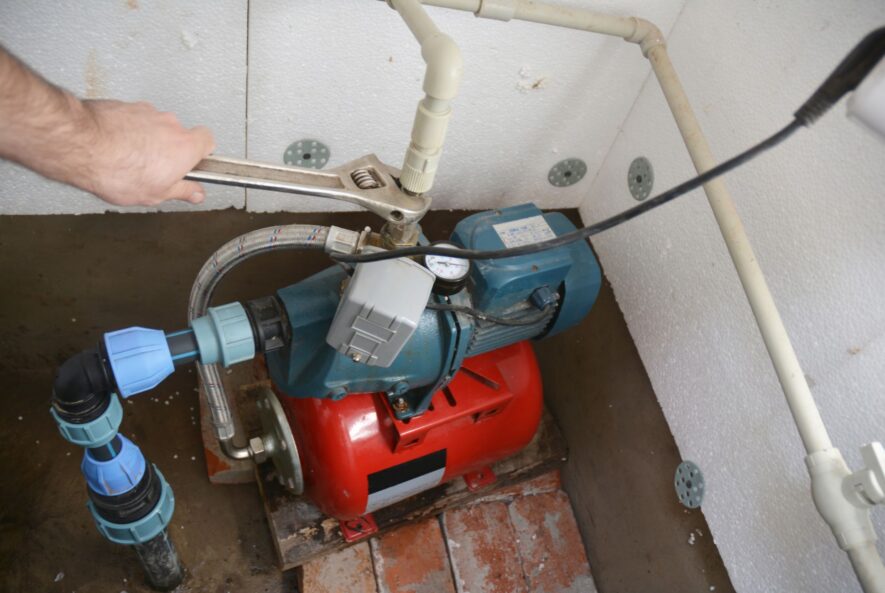
- Waterlogged pressure tank: When the air cushion inside a pressure tank fails, the tank fills with water. The pump then short-cycles, turning on and off far more than it should.
- Failed pressure switch: This small switch tells the pump when to start and stop based on tank pressure. A stuck or corroded contact can keep the pump from starting, or make it run nonstop.
- Lost prime: Jet pumps in particular can lose their prime, the column of water needed to create suction. This happens when there is an air leak in the suction line or the water level drops below the intake.
- Failed check valve: This valve keeps water from draining back into the well between pump cycles. A stuck-open check valve lets water flow backward, so the pump loses prime repeatedly.
- Motor failure: Bearings wear out, windings burn, and capacitors weaken with age. This is especially common in pumps that have already logged a decade or more of service.
- Low water table or a dry well: During drought conditions or a temporary drop in groundwater, a well can produce less water than the pump is trying to draw. That shortfall causes the pump to run dry and shut off on thermal overload.
All State’s guide on priming a well pump walks through the mechanics in more detail, including how a lost prime develops and what it looks like day to day.
Well pump won’t turn on: what to check first
When the pump gives no response at all, work through a short list of safe checks first.
- Check the breaker panel for a tripped breaker and reset it once. If it trips again immediately, stop and call a professional, since that usually signals a short or a failing motor.
- Look for a blown fuse if the system uses a fuse box rather than breakers, and replace it with one of the same rating.
- Confirm the pressure switch has power and that its contacts are not visibly corroded or pitted.
- Check that any disconnect switch near the pressure tank or well casing has not been bumped off.
- Listen for a hum with no rotation, which often points to a seized motor or a failed capacitor rather than a wiring issue.
Anything beyond resetting a breaker or checking a switch by sight involves electrical components near water. This is not a place to improvise. A miswired pressure switch or a pump pulled without the right equipment can turn a moderate repair into a much bigger one.
Well pump keeps running but no water: what that usually means
A pump that runs continuously without delivering water is telling a different story than one that will not start. Common causes include a lost prime, a check valve stuck open, a pipe leak between the pump and the pressure tank, or a water level that has dropped below the pump intake in a shallow well. Air can also get trapped in the lines after the pump is serviced or after an extended power outage, and it needs to be purged before flow returns to normal.
Well pump tripped breaker: is it safe to reset?
Resetting a tripped breaker once is a reasonable first step. If the breaker holds and the pump runs normally afterward, the trip may have been caused by a brief power surge. A different pattern shows up when the breaker trips again right away, or trips repeatedly over a day or two. That usually means a wiring fault, a failing motor drawing excess current, or a bad breaker itself, and continuing to reset it risks an electrical fire or permanent motor damage. Call a licensed plumber or electrician at that point rather than cycling the breaker again.
Signs the pump itself needs replacement, not just a part
Not every well pump problem means the pump is done. A pressure switch, a capacitor, or a control box can often be swapped out for a fraction of the cost of a new pump. Doing so restores normal function if the pump’s motor and bearings are still sound. According to Angi’s guide on well water problems, pump controller replacement typically runs a few hundred dollars, well below the cost of a full pump swap.
Warning signs the pump is at the end of its life
Certain signs point toward the pump itself being at the end of its service life:
- Grinding, screeching, or humming noises coming from the well casing or pump housing
- Water pressure that has dropped gradually over months rather than failed suddenly
- Frequent short-cycling even after the pressure tank and switch have been checked
- Sandy or gritty water, which can mean the pump is drawing sediment from a worn impeller area
- A noticeable jump in electric bills as a struggling motor works harder to move the same amount of water
- A pump that has already logged 10 to 15 years of service, which is the typical working lifespan for most residential well pumps
All State’s articles on signs of well pump failure and well pump lifespan go into more detail on how age and symptoms combine to point toward replacement.
Ruling out the pressure tank first
Pressure tank issues in particular get mistaken for pump failure fairly often. The water pressure tank problems page explains how to tell the two apart. If replacement does turn out to be the answer, the well pump replacement cost guide breaks down typical pricing by pump type.
Well maintenance also matters more than most homeowners assume. The EPA’s guidance for private well owners recommends periodically inspecting the well casing and cap for damage. Keeping accurate maintenance records helps too, since both steps help a technician diagnose problems faster when something does go wrong.
Conclusion
A well pump that stops working almost always fits one of a few known patterns. No power is reaching the pump, a waterlogged tank or bad switch is causing short-cycling, a lost prime or failed check valve is keeping the pump from moving water, or a motor has simply reached the end of its life. A handful of checks, a breaker reset, a look at the pressure switch, listening for unusual sounds, can narrow down the cause before a technician arrives. Anything involving wiring, the pump itself, or work at the wellhead calls for a licensed professional.
All State Plumbing Pros diagnoses and repairs well pump problems throughout Fairfield County, CT and Westchester County, NY. Services include pressure switch and control box replacement, pump repair, full pump replacement, and general residential plumbing service. If your well pump has stopped working or is acting up, contact All State Plumbing Pros for a diagnosis, or learn more about the company’s well pump service before you call.
FAQs
Why did my well pump suddenly stop working?
The most common sudden causes are a tripped breaker, a blown fuse, or a power surge that knocked out the pressure switch. If resetting the breaker once does not solve it and it trips again, the cause is more likely a wiring fault or a failing motor. That calls for professional diagnosis.
Why does my well pump keep running but no water comes out?
This usually means the pump has lost its prime, a check valve is stuck open and letting water drain back into the well, or the water level has dropped below the pump intake. Running the pump dry for an extended period can damage the motor. It is worth shutting it off until the cause is identified.
How do I reset a well pump pressure switch?
Most pressure switches have a small reset lever or button on top. Shut off power to the pump first, then press or reset the lever to clear a tripped switch. If the switch trips again shortly after, the switch itself may be worn out and need replacement rather than another reset.
How long do well pumps typically last?
Most residential well pumps last between 8 and 15 years, depending on the pump type, water quality, and how often the pump cycles on and off. Submersible pumps tend to outlast jet pumps. Pumps in wells with heavy sediment or frequent cycling often wear out sooner.
Is a well pump problem always the pump itself?
No. Many well pump symptoms actually trace back to the pressure switch, the pressure tank, or the control box rather than the pump motor. A professional diagnosis can often identify a cheaper component fix before assuming the entire pump needs to be replaced.