Frozen pipes: what to do before the plumber arrives
With frozen pipes, what to do first is simple: keep the faucet open, find the frozen section, and warm it with gentle heat like a hair dryer or heating pad. Never use an open flame. Before you start, find your main water shutoff so you can close it fast if the pipe has already split.
Freezing temperatures hit older homes hard across Fairfield County, CT, and Westchester County, NY. In our experience, the calls cluster in houses where plumbing runs along exterior walls or through crawl spaces. We see it in Danbury homes and just as often in Bethel, Newtown, New Milford, Ridgefield, and Wilton.
If you can’t find the frozen spot or it won’t thaw, All State Plumbing Pros handles emergency plumbing calls across the area, and a licensed technician is typically dispatched within 1-2 hours.
How do you know if a pipe is frozen?
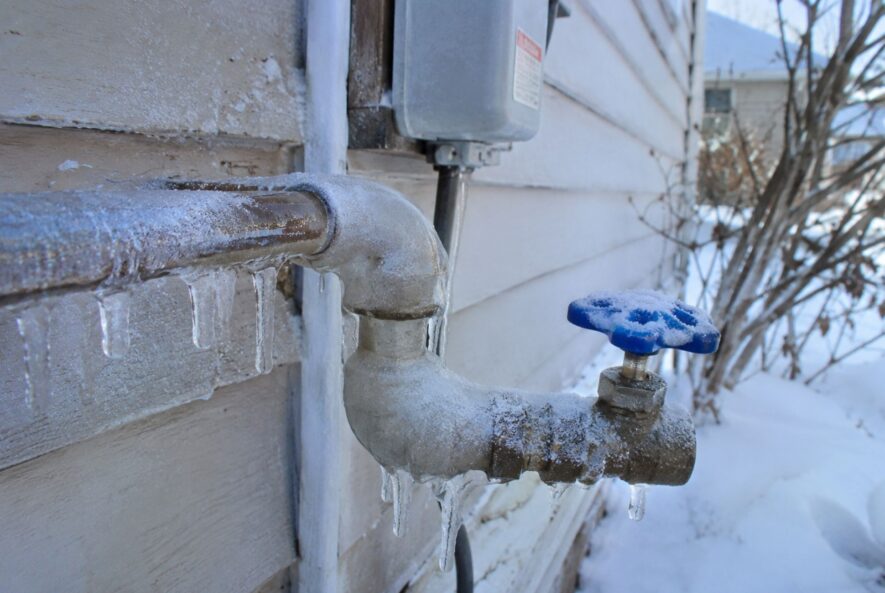
The clearest sign is a faucet that gives you only a trickle, or nothing at all, in cold weather. Frost on exposed pipes is another giveaway, especially on pipes along exterior walls or where the water service comes in through the foundation. If one faucet works and another doesn’t, the frozen spot is on the water line feeding the dead one. Our article on what makes frozen pipes split explains the cause in more detail.
Frozen pipes: what to do in the first 30 minutes
Keep the faucet open, check your other taps, find the main shutoff, and then warm the frozen section. Work through these steps in order.
- Leave the affected faucet open, even if it’s barely running.
- Check your other faucets, hot and cold, to see which ones are also affected.
- Find your main shutoff and make sure you can reach and turn it.
- Look along exposed pipes on outside walls and under sinks for frost or a crack.
- Open kitchen and bathroom cabinets to let warm air circulate around the plumbing.
- Warm the frozen area with a safe heat source.
- Stop and call a plumber if you see a crack or a leak.
Should I leave faucets open if pipes are frozen?
Yes. Keep the affected faucet open while you thaw, because moving water helps melt the ice. The exception is damage: This Old House’s guide to unfreezing pipes says that if you see cracks in your pipes or none of your faucets work, turn off the water to your home. So thaw with the water supply on, but have the main valve ready. Our guide on finding and closing your main shutoff shows where it usually sits.
Where pipes freeze in Fairfield and Westchester homes
Pipes freeze where cold air reaches them, and house heat doesn’t. The Red Cross points to pipes exposed to severe cold, like outdoor hose bibs, swimming pool supply lines and water sprinkler lines, plus pipes in unheated areas such as basements, crawl spaces, attics, garages and kitchen cabinets. In older Fairfield County houses, we often find supply lines run inside exterior walls with little insulation. That’s why one bathroom can freeze while the rest of the house stays fine.
How to thaw a frozen pipe safely
Apply gentle heat to the frozen area until full water pressure comes back. The American Red Cross frozen pipe guidance lists an electric heating pad wrapped around the pipe, an electric hair dryer, a portable space heater kept away from flammable materials, or towels soaked in hot water. This Old House suggests starting at the faucet end and working back toward the frozen section. Low, slow heat is safer, and never leave a space heater running in an empty room.
What not to do with a frozen pipe
Never use an open flame. The Red Cross warns against a blowtorch, a kerosene or propane heater, a charcoal stove, or any other open flame device. Skip chemical drain products, which are made for clogs, not ice. Use towels soaked in hot water instead of pouring it from a kettle onto the pipe.
Can frozen pipes unfreeze on their own?
Yes, frozen pipes thaw on their own as temperatures rise, but waiting is a gamble. While the ice sits there, pressure builds, and the pipe can split. Gentle heat now is safer than waiting for a warm afternoon.
How long can pipes stay frozen before bursting?
There’s no set time. It depends on the pipe material, the temperature, and how much pressure builds behind the ice. As Angi puts it, “There’s no telling when your pipe will burst,” so treat any frozen line as urgent and thaw it promptly.
How to tell if a frozen pipe has burst
A burst often shows up as the pipe thaws, because the ice that plugged the crack melts away. Watch for dripping water, a damp spot spreading on a ceiling, or standing water on the basement floor. Homeowners often ask us why the leak appeared only after thawing: the split formed while the pipe was frozen. If it has burst, shut the main right away and keep clear of outlets near the water. Photograph the water damage for your insurance company, then see our burst pipe repair guide.
When to call a plumber
Call a licensed plumber when the frozen section is hidden, out of reach, or won’t thaw. That’s the Red Cross guidance, and it matches what we see. Call right away if:
- You see a crack or leak on the line.
- No faucets in the house are working.
- The frozen section is inside a finished wall or ceiling.
- You’ve applied heat and the flow hasn’t improved.
When you call, say which faucets are dead and whether you’ve shut the main.
What do plumbers use to unfreeze pipes?
Plumbers use controlled heat sources and professional thawing equipment to warm a pipe without an open flame. A plumber can also find the frozen section inside a wall and check the line for cracks before the water goes back on.
How to prevent frozen pipes next time
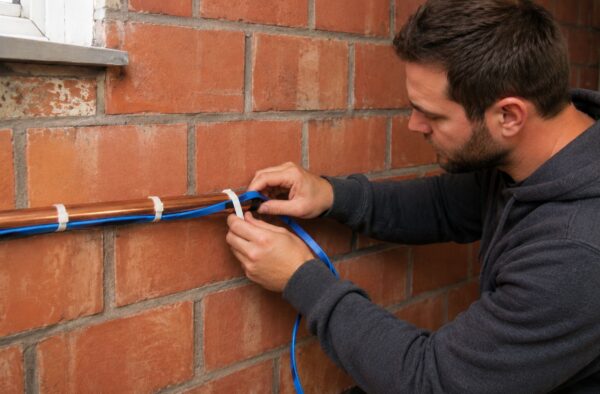
To keep pipes from freezing again, the Red Cross suggests letting cold water drip from faucets served by exposed pipes in very cold weather, keeping garage doors closed if water supply lines run through the garage, and insulating both hot and cold water pipes. If you’re away, keep the thermostat no lower than 55°F. A steady thermostat may mean a higher heating bill, but that costs less than a burst pipe. Our guide on how to prevent frozen pipes covers where to add insulation. Heat tape versus a space heater is a separate decision with its own safety rules.
Conclusion
When a pipe freezes, keep the faucet open, find the frozen section, and warm it slowly with a hair dryer, heating pad, space heater, or hot towels. Never use an open flame. Know where your main shutoff is before you start, and close it the moment you see a crack or a leak.
If the pipe won’t thaw, sits inside a wall, or has already split, call All State Plumbing Pros at (203) 456-3636. Our licensed and insured team offers 24/7 emergency service, emergency plumbing repairs, and burst pipe repair across Fairfield County, CT, and Westchester County, NY. You can also send us a message, or start from the All State Plumbing Pros homepage for our other services.
Frequently Asked Questions
How do I know if my pipes are frozen?
A faucet that gives only a trickle or no water in cold weather is the clearest sign. Frost on an exposed pipe, especially along an outside wall, also points to ice.
Can I use a hair dryer to thaw pipes?
Yes. The American Red Cross lists an electric hair dryer as a safe way to thaw a frozen pipe. Keep it moving and stay away from any standing water.
How long does it take to thaw a frozen pipe?
Angi says thawing a pipe yourself usually takes around 30 minutes but can take longer. If gentle heat hasn't restored full pressure after 30 minutes to an hour, stop and call a plumber.