How to winterize outdoor faucets and hose bibs before a freeze
To winterize an outdoor faucet, close the indoor shutoff valve that feeds it, disconnect the garden hose, and open the outside faucet so the remaining water drains. Leave the spigot open, then fit an insulated faucet cover over it. It’s a quick job for each faucet.
Outdoor spigots sit on exterior walls, outside the heated part of the house, so they are among the first fixtures to freeze when cold weather arrives. That’s true whether you’re in Danbury, Ridgefield, Newtown, Brookfield, New Milford, or a Westchester town. If you’re near our shop, our Danbury plumbing team can take care of it for you.
Do it before the first hard freeze, not after. A hose left connected through one cold night can trap water in the faucet and split it. If your spigot has no indoor valve or the valve won’t close, All State Plumbing Pros can fix that through our residential plumbing service.
Do outdoor faucets need to be winterized?
Yes. Outdoor faucets need to be winterized anywhere temperatures drop below freezing, including all of Fairfield County and Westchester. Water left in the faucet or the pipe section behind it expands as it freezes. That builds pressure against the closed valve until the metal or plastic gives way. The result is a cracked spigot or burst pipes inside the wall, and that water damage often goes unseen until the faucet is used again.
How to winterize an outdoor faucet, step by step
The process is short: stop the water supply, drain the water left in the line, and cover the faucet. The American Red Cross gives the same core advice in its guide to preventing frozen pipes. Close the inside valve, and keep the outside valve open.
- Disconnect garden hoses from every outdoor spigot. Drain hoses, coil them, and store them in a garage or shed.
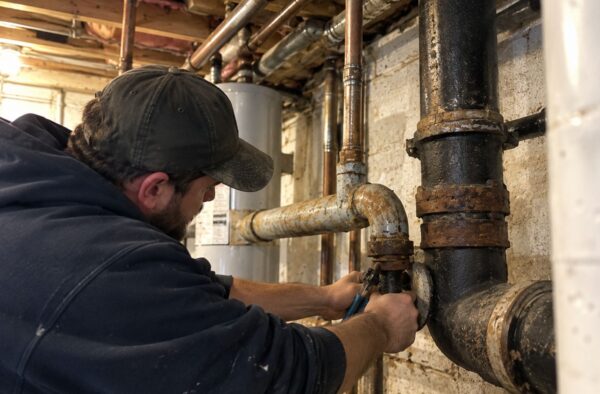
- Find the indoor valve for each outdoor faucet. It’s usually in the basement or crawl space, on the pipe running toward the exterior wall.
- Close that shutoff valve fully.
- Open the exterior faucet all the way and let the remaining water drain until the flow stops.
- Back inside, put a bucket under the valve and open its small bleeder cap if it has one.
- Leave the spigot open for the winter so any trapped water has room to expand.
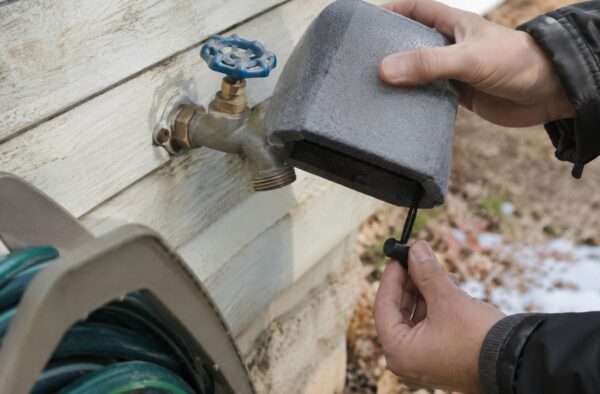
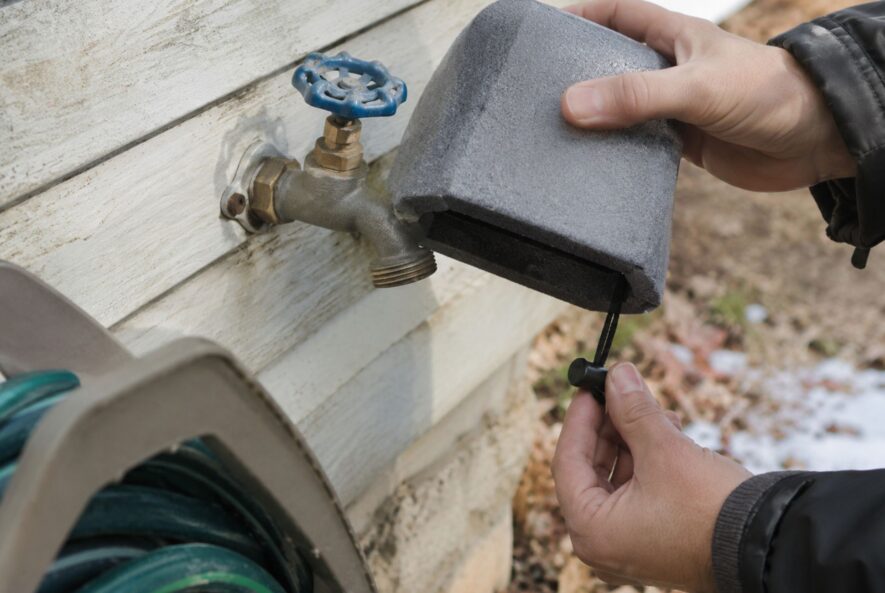
- Fit an insulated faucet cover over the spigot.
If a hose coupling is stuck, an adjustable wrench usually breaks it loose. In our experience, step 4 is the one people skip. Closing the indoor valve stops new water, but only opening the outside faucet lets the line drain.
Frost-free vs. standard outdoor faucets
A frost-free hose bib puts its shutoff valve inside the heated wall, at the end of a long barrel, instead of at the spout. Angi’s overview of hose bibs notes that freeze-proof bibs have the valve inside and a supply pipe that slopes downward. That slope lets water drain out when you close the handle. A standard outdoor faucet holds water right at the exterior wall, so it needs the full shut-off-and-drain routine every fall.
How to tell if your outdoor faucet is frost-free
The surest check is from inside the house. A standard spigot usually has a separate shutoff valve on the pipe before it exits the wall. On a frost-free model, the faucet body itself runs through the wall, and the supply pipe connects to it inside. Many also have an anti-siphon cap on top. Homeowners often ask us which type they have. If the basement is finished and the pipe is hidden, a plumber can tell you quickly.
What frost-free hose bibs still need
Frost-free faucets still need the hose disconnected. Manufacturer installation instructions for frost-proof sillcocks state that the hose must be removed so the water can drain. A connected hose holds water in the barrel, where it can freeze. Pull the hose, make sure the faucet doesn’t drip, and add a cover on a windy wall for extra protection.
What is the best way to insulate an outdoor faucet?
The best way to insulate an outdoor faucet is to drain it first, then fit a snug insulated faucet cover over it. A cover slows heat loss and keeps cold air and wind off the spigot. Foam covers and padded fabric covers both work if they seal tightly against the siding. If the pipe leading to the faucet runs through an unheated garage or crawl space, add foam pipe sleeves there. A cover won’t save a faucet that still has water inside.
Will outside faucets freeze at 30 degrees?
An undrained outside faucet can freeze at 30 degrees, because water freezes at 32°F. Whether it does depends on how long the cold lasts, how hard the wind hits that wall, and how much house heat reaches the pipe. A short overnight dip may not freeze a faucet on a sheltered wall. A long stretch of freezing weather on an exposed wall is a different story, so winterize your outdoor faucets before nights settle below freezing.
Signs an outdoor spigot froze or cracked
A faucet that only trickles or won’t flow at all is likely frozen, according to the Red Cross. Cracks often show up later, when the ice melts or the faucet is used again. Watch for these signs:
- Little or no water flow with the valve open
- Dripping from the spout or handle after it’s shut
- Wet drywall or damp spots in the basement near the faucet
- Water spraying from the wall, not the spout, in spring
A crack in a frost-free barrel can stay hidden all winter because the break sits inside the wall. A slow drip is worth fixing too, since EPA WaterSense counts a once-per-second drip at over 3,000 gallons a year. If the pipe behind the wall split, see our guide to burst pipe repair.
When to call a plumber for outdoor faucets
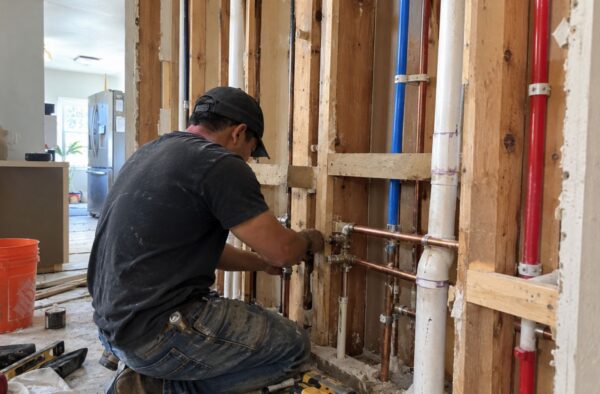
Call a plumber when you can’t fully stop the water to an outdoor faucet or you find damage. That covers a missing indoor shutoff, a seized valve, a spigot that drips after shutoff, or any leak inside the wall. It’s also the right call for replacing a standard faucet with a frost-free model, which means cutting into the supply pipe and setting the new faucet so it drains. We see older homes in this area where the only way to stop an outdoor faucet is the main water shutoff valve. Adding a dedicated valve is a small fix.
Conclusion
Winterizing an outdoor faucet comes down to a few habits: disconnect garden hoses, close the indoor valve, drain the spigot, leave it open, and cover it. Frost-free faucets make the job easier, but they still need hoses removed. For the rest of the house, see our guides on how to winterize home plumbing and how to prevent frozen pipes.
Need a valve added, a cracked spigot replaced, or a frost-free faucet put in before the cold sets in? All State Plumbing Pros handles outdoor faucet repairs, residential plumbing, and 24/7 emergency service, and our plumbers are licensed and insured in CT and Westchester County, NY. Reach us through our contact page or at (203) 456-3636, and browse the rest of our work on our homepage.
FAQs
Should I leave my outdoor faucet open or closed in winter?
Leave the outdoor faucet open after you close the indoor valve and drain it. An open spigot gives any remaining water room to expand instead of cracking the faucet or pipe.
Will wrapping a towel around an outdoor faucet keep it from freezing?
A towel offers little protection and holds moisture once it gets wet. Drain the faucet first, then use a snug insulated faucet cover, which blocks cold air far better.
Do frost-free hose bibs need to be winterized?
Yes, but the job is simpler. Disconnect the hose so water can drain from the barrel, confirm the faucet doesn’t drip, and add a cover on exposed walls for extra protection.
When should I winterize outdoor faucets?
Winterize outdoor faucets before the first hard freeze, ideally as soon as you’re done using garden hoses for the season. Waiting until after a cold night risks a cracked spigot.
What if my outdoor faucet doesn’t have an indoor shutoff valve?
Without an indoor valve, the faucet can’t be drained, so it stays full of water all winter. A plumber can add a dedicated shutoff valve or replace it with a frost-free model.