Water Softener Installation: What CT Homeowners Should Know
A typical water softener installation costs somewhere between $500 and $5,000. The exact price depends on the system type, your home’s plumbing, and whether you hire a professional plumber or tackle it yourself. Single-tank ion exchange units tend to land on the lower end of that range. Whole-home or dual-tank systems built for heavy iron and hardness push toward the top.
Here in Fairfield County, CT, and Westchester County, NY, that range matters more than it might elsewhere. Homeowners in Danbury, New Milford, Ridgefield, Wilton, Bethel, Newtown, and Brookfield rely heavily on private wells. Well water in this part of New England is notorious for high mineral content. Add in older housing stock with copper and galvanized pipe. Hardness minerals build up faster here than in a lot of municipal water systems downstate or in the city.
You might be noticing chalky white buildup on faucets, weak water pressure, or a water heater that’s working harder than it should. A properly sized and correctly installed water softener can fix all three. All State Plumbing Pros installs and services water softening systems throughout the region. Our residential plumbing team can help you figure out whether your home’s plumbing and water quality call for one before you spend a dime.
How Much Should It Cost to Install a Water Softener System?
Cost depends on the softener type, your household size, and how much rework your existing plumbing needs. Here’s a general breakdown based on national cost data:
| System Type | Typical Installed Cost |
| Single-tank ion exchange | $500 – $1,700 |
| Dual-tank ion exchange (uninterrupted soft water) | $1,000 – $5,000 |
| Salt-free conditioner | $800 – $4,000 |
| Whole-home reverse osmosis pairing | $4,000 – $11,000 |
According to Angi’s 2026 cost data, most homeowners land around $1,500 total for a standard installation. Labor alone runs $150 to $500 for a straightforward tie-in. That cost climbs when a plumber has to reroute pipe, add an electrical outlet, or relocate a water meter to make room for the unit.
Factors that push the price up or down include:
- Water hardness level and grain capacity needed
- Distance between the main water line and a drain
- Whether the utility room already has a nearby electrical outlet
- Iron or manganese removal needs, common in CT well water
- Access to the main water supply valve and existing pipe fittings
- Brand and warranty length on the unit itself
Homes on well water, which is the norm across much of Fairfield and Litchfield County, often need a larger brine tank and higher-capacity resin bed than homes on municipal water supply. That’s because private wells frequently carry more dissolved iron and manganese along with calcium and magnesium.
What Does the Installation Process Actually Involve?
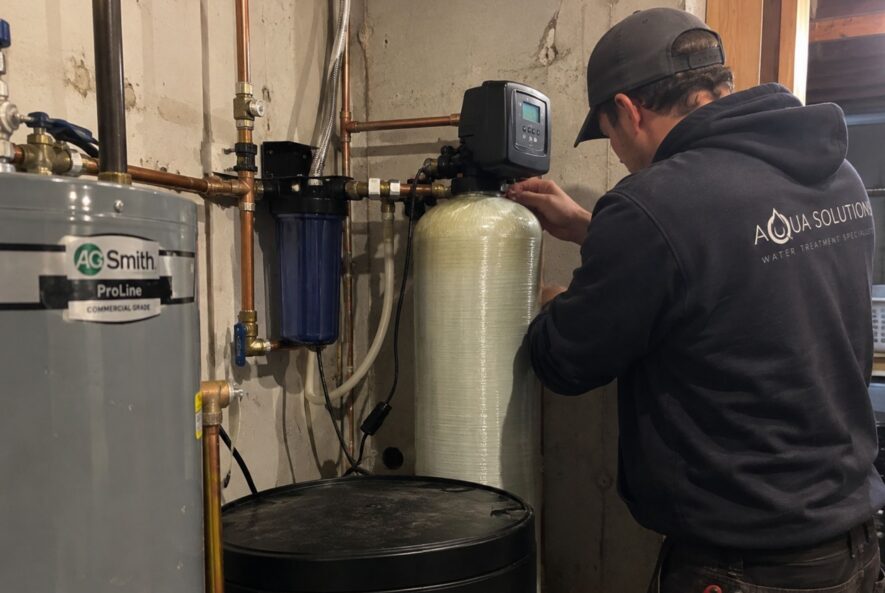
Whether you install a water softener yourself or hire a professional plumber, the installation process follows the same basic sequence. The unit gets plumbed into your home’s plumbing at the point where water enters the house, before it reaches the water heater and other water-using appliances.
Finding the Best Location
Most systems are typically installed in a basement, utility room, or garage, as close as practical to the main water line entry point and a floor drain. You’ll want a level, dry space with room for both the resin tank and the brine tank. Leave enough clearance to service the bypass valve later, too. A nearby electrical outlet is helpful as well, since most modern control valves need a power supply to run the regeneration cycle.
The Core Installation Steps
- Shut off the main water supply valve so no water flows through the home’s plumbing during the install.
- Cut into the water supply line at the chosen entry point, typically before the water heater.
- Install the bypass valve onto the softener’s control head. The bypass valve lets you route water around the unit for maintenance without shutting off water to the whole house.
- Connect the inlet and outlet ports to the existing plumbing using the appropriate pipe fittings, whether copper, PEX, or CPVC.
- Run drain tubing from the control valve to a nearby drain, laundry sink, or floor drain, keeping an air gap to prevent backflow.
- Connect the brine tank to the control valve with the brine line.
- Plug the unit into an electrical outlet and program the control valve according to the manufacturer’s instructions.
- Turn the main water supply valve back on slowly, check all plumbing connections for leaks, and run the unit through an initial regeneration cycle.
Most installations take two to four hours from start to finish for a straightforward setup with easy access to the main water line and a drain. Homes with finished basements, tight utility rooms, or older galvanized pipe can take longer. A plumber may need to add or reroute pipe before the system will fit.
Water Meter and Bypass Placement
The softener sits after the water meter but before the water heater, so every water-using appliance in the house benefits from softened water. The bypass valve should be installed in a spot you can reach easily. You’ll use it any time the unit needs maintenance, resin replacement, or a full mineral buildup flush.
Can I Install a Water Softener System Myself?
DIY installation is possible if you have previous plumbing experience and the right tools. You also need a straightforward setup with easy access to your main water line and a drain. You’ll need an adjustable wrench, pipe cutter, plumber’s tape, and the patience to follow the manufacturer’s instructions closely. A poorly sealed connection at any of the plumbing connections can cause a leak that damages flooring or drywall.
That said, DIY installation gets a lot riskier in homes with:
- Older or mismatched pipe materials that don’t accept standard fittings
- Well systems that also need a whole-home filter or iron removal stage
- Limited space near the main water supply valve
- No existing electrical outlet in the utility room
- Any history of low water flow or pressure issues
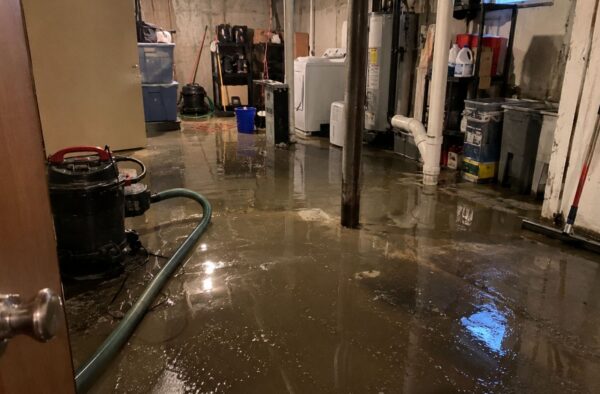
If any of those apply, a mistake during installation can mean a flooded basement, a damaged water heater, or a softener that never actually treats the water correctly.
Should a Plumber Install a Water Softener?
For most households, yes. A licensed plumber understands your home’s plumbing system and can size the unit correctly for your water quality and household size. They also carry the tools and experience to complete the job in a single visit without guesswork. Professional installation protects your homeowner’s insurance and any manufacturer’s warranty, too, since many warranties are voided by improper self-installation.
This matters even more for well-water homes throughout Westchester and Fairfield counties. A plumber familiar with local water conditions can test for iron, manganese, and hardness minerals. From there, they match the equipment to what your specific water quality actually requires. That beats installing a generic unit that undersizes the problem. All State Plumbing Pros handles softener installation as part of our broader plumbing services. We can also pair it with well pump inspection if your system is fed by a private well.
How Difficult Is It to Install a Water Softener?
Installation difficulty depends mostly on your comfort level with soldering, cutting pipe, and working with plumbing connections under pressure. For someone with real plumbing background, it’s a moderate weekend project. For a first-time DIYer, the risk of a bad seal, a miscut water supply line, or an improperly vented drain line is real. Most people are better off hiring it out.
The trickiest parts tend to be:
- Cutting a clean, square section out of the existing water supply line
- Getting the bypass valve fully seated so it doesn’t leak
- Running drain tubing with a proper air gap
- Matching pipe fittings when your home has mixed materials from past repairs
None of these are impossible for a handy homeowner, but they’re exactly the kind of details a professional plumber checks automatically.
Why Hard Water and Well Water Matter So Much in Connecticut
Connecticut’s Department of Public Health recommends that private well owners test their water for basic indicators every year, with additional contaminants like lead, arsenic, and radon tested roughly every three to five years. Yet UConn Extension research suggests most well owners go far longer between tests. That’s a problem in this region specifically. Well water quality here commonly includes elevated hardness, iron, and manganese. None of these announce themselves until you see staining, taste metal, or notice your plumbing system scaling up faster than expected.
The EPA classifies iron and manganese as secondary contaminants tied to taste, staining, and aesthetic water quality rather than direct health risk. Still, the EPA’s guidance on nuisance chemicals confirms that both minerals cause the reddish staining, black residue, and metallic taste many CT well owners already deal with. A correctly sized water softener, sometimes paired with an iron filter, resolves most of that.
Left untreated, hard water and mineral-heavy well water accelerate wear throughout your home. It’s a leading contributor to plumbing problems like reduced water flow, clogged aerators, and a water heater that loses efficiency years ahead of schedule.
Conclusion
Installing a water softener is one of the more worthwhile upgrades a Fairfield County or Westchester County homeowner can make, especially on well water. The installation process itself, from tying into the main water supply to setting the bypass valve and drain line, is manageable for an experienced DIYer. It’s genuinely risky for someone without previous plumbing experience, though. Costs typically run $500 to $5,000 depending on system type and how much your existing plumbing needs to accommodate the new equipment.
Maybe you’re dealing with hard water stains, a water heater that’s scaling up, or you just tested your well and don’t love the results. Either way, All State Plumbing Pros can size, install, and service a water softener system built for your home. We offer emergency plumbing service, drain cleaning, water heater repair and installation, well pump service, and full residential and commercial plumbing across Danbury and the surrounding towns. Contact us for a straightforward quote, or visit our homepage to see the full range of services we bring to homes throughout the region.
FAQs
How much should it cost to install a water softener system?
Most homeowners spend $500 to $5,000 total, with a typical single-tank system landing near $1,500 including labor. Cost climbs with grain capacity, dual-tank setups, and any extra plumbing work needed to reach the main water line or an electrical outlet.
Can I install a water softener system myself?
Yes, if you have prior plumbing experience, the right tools, and easy access to your main water supply valve and a drain. Homes with older pipes, tight utility rooms, or well-water iron issues are much better candidates for professional installation.
Should a plumber install a water softener?
For most households, yes. A plumber sizes the unit correctly for your water quality and protects your warranty. They also complete the plumbing connections without the leak risk that comes with a first-time DIY attempt. This is especially true for well-water homes where iron and manganese complicate the setup.
How difficult is it to install a water softener?
It’s a moderate-difficulty project for someone comfortable cutting and sealing pipe, running drain tubing, and following the manufacturer’s instructions closely. For a first-time DIYer, the margin for error around the bypass valve and water supply line is small enough that hiring a professional plumber is usually the safer call.