Constant-Pressure Well Systems: Are They Worth It?
A constant pressure well system typically costs between $2,000 and $5,000 installed, compared to $400 to $2,500 for a conventional pressure tank setup. That price gap is real. So is the difference in day-to-day performance. A constant pressure system uses a variable speed pump to maintain steady water pressure whether one faucet is running or four fixtures are going at once. A conventional system lets pressure drop every time demand changes.
For homeowners across Fairfield County, CT, and Westchester County, NY, this decision matters more than it does in cities on municipal water. Towns like Danbury, New Milford, Ridgefield, Wilton, Bethel, and communities throughout Westchester rely heavily on private wells rather than city water. Older homes in these areas were often built with a single traditional pump and a standard-sized pressure tank. As families add bathrooms, install irrigation systems, or upgrade appliances, that original pump system frequently can’t keep up. Fluctuating water pressure becomes a daily annoyance instead of an occasional inconvenience.
If you’re dealing with weak showers when the dishwasher runs, low water pressure upstairs, or a well pump that seems to be working overtime, it’s worth understanding exactly what a constant pressure system does before you spend money on it. All State Plumbing Pros installs and services both conventional and constant pressure well pump systems throughout the region. Our well pump service team can evaluate your current setup and tell you honestly whether the upgrade makes sense for your house.
How a Constant Pressure Well System Works
A conventional system relies on a pressure switch that turns the pump fully on when tank pressure drops to a low point, then off again once it hits a high point. That on/off cycle is why traditional pumps produce the pressure swings you feel in the shower. It happens when someone flushes a toilet or starts the washing machine. The pump either runs at full power or not at all. The pressure tank absorbs the difference.
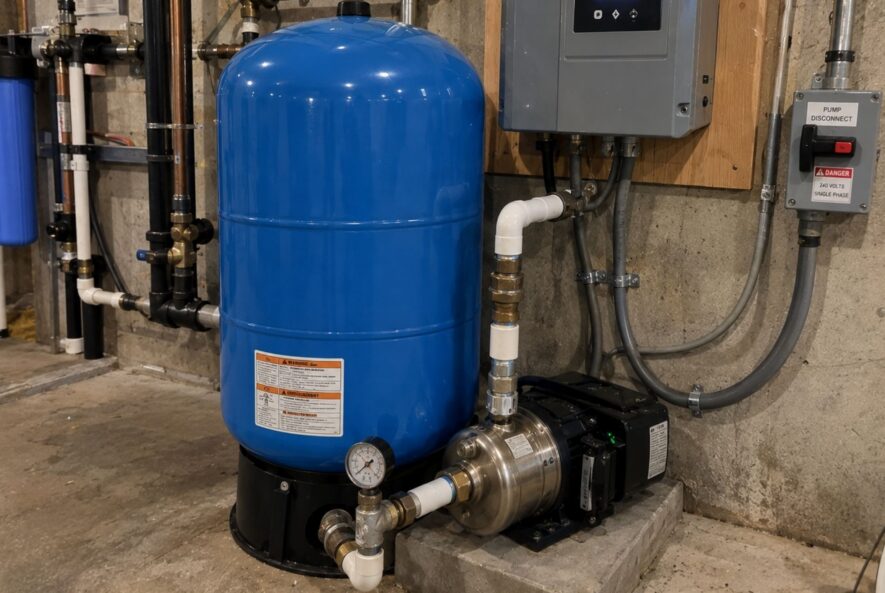
A constant pressure system replaces that on/off logic with a variable speed pump controlled by a pressure sensor and electronic control board. Instead of switching abruptly, the variable speed motor ramps up or down continuously. It matches exactly how much water the house is using at that moment. Turn on one faucet, and the pump runs at low speed. Start a shower, the dishwasher, and an irrigation system at the same time. The pump automatically increases speed to maintain consistent pressure across all of them. This is why constant pressure pumps can use a smaller pressure tank than a conventional system needs. Since the pump itself is doing the work of maintaining pressure, the tank is mainly there for backup. It doesn’t need the large volume a standard pressure tank requires. That’s a real space-saving advantage in a tight mechanical room or crawlspace.
Most constant pressure setups also include a soft start feature. It eases the motor into operation gradually rather than slamming it to full speed instantly. That reduces mechanical stress and protects the pipes and pump components from the sudden drops and surges that wear out standard pumps faster. It also extends the working life of the equipment.
Benefits of a Constant Pressure System
The advantages show up most in houses with high demand or multiple bathrooms:
- Steady water pressure at every fixture, even with multiple bathrooms or appliances running at once
- No pressure drops when someone flushes a toilet while you’re in the shower
- Smaller tank footprint, freeing up space in a basement or utility closet
- Soft start reduces wear, and pump protection extends equipment lifespan
- Better performance for homes with irrigation systems, multi-head showers, or well-water dependent appliances
- Potential energy savings since the motor isn’t cycling at full power for every small draw
According to a U.S. Department of Energy technical guide on variable speed pumping, facilities that install variable speed drives on pumps commonly see energy savings of 30 to 50 percent compared to constant-speed operation (U.S. Department of Energy). That’s because the motor only uses as much power as the demand actually requires, rather than running at full output and wasting the rest. The same document notes that lower operating speeds reduce hydraulic stress on internal components, meaning less wear over time. In a residential well application, that generally translates into a longer life for the pump and fewer emergency calls. The total dollar savings on a typical home’s electric bill are modest, though, often in the range of a hundred dollars or so per year.
Drawbacks and Common Problems
A constant pressure system isn’t without downsides. It’s not the right fit for every property.
- Higher upfront cost than a conventional system, sometimes by several thousand dollars
- More complex electronics, meaning more parts that can eventually fail
- Requires proper installation and periodic professional service, not a DIY project
- Pressure sensor and control board issues are the most common problems reported
- Still depends entirely on a healthy well and functioning pump. It doesn’t fix a low-flow well
- Some older 2-wire pumps aren’t compatible and need to be replaced along with the controller
The pressure sensor is usually the first thing to check when a constant pressure system starts acting up. If the sensor fails or gives an inaccurate reading, the control board can’t respond correctly. That shows up as pressure that surges, drops, or won’t stabilize. Control board and wiring failures are the next most common issue, particularly in systems that weren’t installed by an experienced well pump plumber. It’s also worth remembering that a constant pressure system only controls how pressure is delivered. If your well itself has a weak flow, a failing pump, or a pressure tank problem, upgrading to a variable speed pump won’t solve those underlying issues. Our guide on signs of well pump failure covers the warning signs worth watching for regardless of which system you have.
Constant Pressure vs. Conventional: Cost Comparison
| System Type | Typical Installed Cost | Best For |
| Conventional pressure tank system | $400 – $2,500 | Smaller homes, one or two bathrooms, lighter usage |
| Basic constant pressure system | $2,000 – $4,000 | Homes with multiple bathrooms or moderate high demand |
| Premium constant pressure system with monitoring | $3,500 – $5,500 | Larger homes, irrigation systems, commercial use |
| Electrical panel upgrade (if required) | $300 – $800 | Older homes with outdated wiring |
Costs vary based on well depth, pump horsepower, existing electrical infrastructure, and whether your current pump is compatible with a new controller. A 3-wire submersible pump can often be paired with a new variable speed control unit. A 2-wire pump typically needs full replacement, which adds to the total. Brand also matters. Premium manufacturers charge more but generally offer better long-term reliability. That’s an important factor when you’re relying on the same equipment through cold Connecticut and New York winters. If you’re not sure what pump you currently have, our team can inspect it as part of a well pump service visit.
Is a Constant Pressure System Right for Your House?
Ask yourself how many fixtures typically run at the same time in your household. A single-person home with one bathroom rarely justifies the added expense. A family of five with multiple bathrooms, an irrigation system, and appliances that all draw on private water at once is a much stronger candidate. You may already be noticing weak showers, low water pressure at the far end of the house, or a pump that seems to run constantly. Those are signs your current pump system is being pushed past what it was designed to handle.
It’s also worth having a plumber confirm the well itself can support the increased flow before investing in new equipment. A constant pressure system delivers steady pressure, but it can’t create more water than your well produces. For homes already dealing with a marginal well, our article on low water pressure in house walks through how to diagnose the problem. It could be the pump, the tank, the pressure regulator, or the well itself. If your existing pump is aging out regardless of which system you choose, our breakdown of well pump replacement cost is a useful companion read. Our full plumbing services page lists everything else our team handles beyond well systems.
Conclusion
A constant pressure well system trades a higher upfront cost for steady, consistent pressure at every fixture, a smaller tank, and less wear on the pump over time. A conventional system costs less to install and works fine for lighter household demand. It will always deliver some fluctuating water pressure, though, when multiple fixtures run together. The right choice depends on your home’s size, how many bathrooms and appliances draw on your well at once, and the condition of your existing pump and well.
All State Plumbing Pros installs, repairs, and maintains both constant pressure and conventional well pump systems for homeowners throughout Fairfield County, CT, and Westchester County, NY. We also handle emergency plumbing, drain cleaning, water heater, and residential plumbing services. If you’re dealing with inconsistent pressure, a well pump nearing the end of its life, or you simply want an honest opinion on whether a variable speed system makes sense for your house, contact us. You can also visit our homepage to schedule an evaluation.
FAQs
How much is a constant pressure system for a well?
A constant pressure well system typically costs between $2,000 and $5,000 installed, depending on well depth, pump horsepower, and whether your existing pump is compatible with the new controller. Premium systems with remote monitoring and diagnostics run toward the higher end of that range. A basic setup on a home with an already-compatible pump can come in closer to $2,000.
Is a constant pressure well pump worth it?
For homes with multiple bathrooms, high-demand appliances, or an irrigation system, a constant pressure well pump is usually worth the higher upfront cost. It eliminates pressure drops and extends pump life through gentler operation. For a smaller home with light water usage, a conventional system often performs just fine at a fraction of the cost.
What are some common problems with a constant pressure well pump?
The most common issues are pressure sensor failures and control board problems. Both can cause pressure to surge, drop, or fail to stabilize. Because these systems rely on more electronics than a conventional setup, proper installation and periodic professional maintenance matter more to keep them operating efficiently.
How much does it cost to install a constant pressure well pump?
Installation alone typically runs $500 to $1,500 on top of $800 to $1,500 for the VFD controller unit itself. That puts a basic complete system in the $2,000 to $4,000 range. Costs increase if an electrical panel upgrade or a new pump is required. That can add another $300 to $2,000 depending on your home’s existing setup.