Repiping a house: costs, timeline, and when it’s time
Repiping a house typically costs $1,500 to $15,000, and most homeowners pay around $7,500, according to national cost data from Angi. Your final price depends on a few factors: house size, fixture count, pipe material, and how hard the old pipes are to reach.
That matters in our area. Many homes in Danbury, New Milford, Ridgefield, Newtown, Bethel, and across Westchester County are decades old, and some still run on their original water lines. Local quotes vary with house size, wall access, and material, so treat the national average as a starting point.
Rusty water, low water pressure, or a second or third pinhole leak are all reasons to get a professional opinion. All State Plumbing Pros handles whole-home and partial repiping with PEX, copper, and PVC for homeowners across Fairfield County, CT, and Westchester County, NY.
How much does it cost to repipe a house?
Whole-house repipe costs usually run $1,500 to $15,000, with most homeowners paying about $7,500. Repiping a single fixture is far cheaper, averaging about $1,200 per fixture depending on how much pipe it needs.
| Repipe scope | Typical cost |
| Whole-house repipe (national range) | $1,500 to $15,000 |
| Whole-house repipe (typical) | About $7,500 |
| Labor share of the total | About 70% |
| Single fixture repipe | About $1,200 per fixture |
Source: Angi, updated August 2026. Local prices vary with house size, access, and material.
What drives whole-house repipe costs?
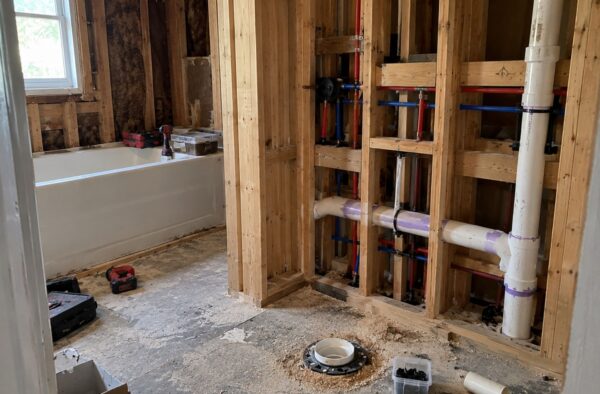
Labor costs are the biggest of the factors behind whole-house repiping prices, at roughly 70% of the total, so anything that adds labor time adds cost. On a $7,500 job, that’s about $5,250. Home size matters too, since more square footage means longer pipe runs and more materials to install. Every extra bathroom or laundry hookup adds plumbing fixtures to connect, and multi-story homes cost more because pipe has to travel between floors. Access is one of the biggest cost variables. Pipes behind plaster walls, tile, or finished ceilings mean more cutting drywall and more patching afterward. In our experience, older homes with finished basements and plaster walls land toward the higher end of the range for exactly this reason.
How much does it cost to repipe a 2,000 sq ft house?
There’s no dependable per-square-foot price for a house repipe, so a 2,000-square-foot home can land anywhere in the national $1,500 to $15,000 range. Two homes with the same square footage can have different numbers of bathrooms, floors, and plumbing fixtures. Each of those changes the total cost. Use the typical $7,500 as a reference point, and rely on an in-home quote for your real number.
Repiping cost by pipe material
PEX is the least expensive repipe material per foot, CPVC is close behind, and copper costs the most. Pipe material is a smaller share of the bill than labor.
| Pipe material | Cost per linear foot (material only) |
| PEX | $0.40 to $2 |
| CPVC | $0.50 to $1 |
| Copper | $2 to $8 |
Many plumbers prefer PEX piping for a house repipe. PEX, short for cross-linked polyethylene, is flexible, needs fewer fittings to turn corners, and won’t corrode. Copper pipes are durable and handle heat well, but they cost more, take more labor to install, and can corrode in acidic water. Some building departments also restrict PEX, so check local code before you settle your material choices. For a full comparison, see our guide to PEX vs. copper vs. PVC.
Hidden costs to budget for
In most cases, you’ll need a permit to repipe, and a permitted job gets inspected after the work is done. Many homeowners also use a repipe as the moment to replace the water main or an aging water heater. Here are the national figures from Angi’s repiping cost guide:
| Added cost | Typical price |
| Plumbing permit | $50 to $500 |
| Drywall repair | About $300 for small fixes, $900+ for larger work |
| Reinspection (if needed) | $25 to $150 |
| Water main replacement (optional) | $600 to $2,500 |
| New water heater installation (optional) | $850 to $1,750 |
Drywall repairs are the easiest cost to overlook, so ask whether patching is in the quote. Repipes and water heaters often go together, and our residential plumbing team can tell you whether replacing yours during the repipe makes sense.
How long does a repipe take, and what is it like?
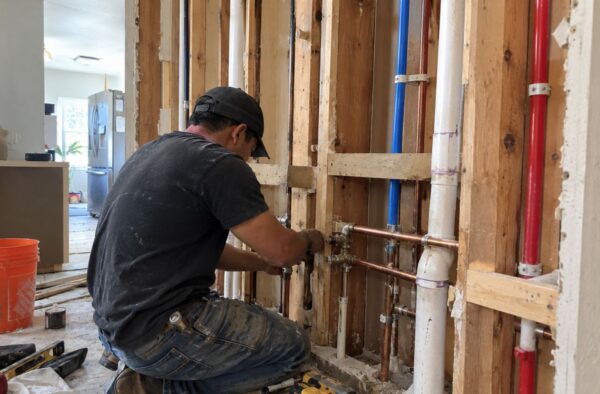
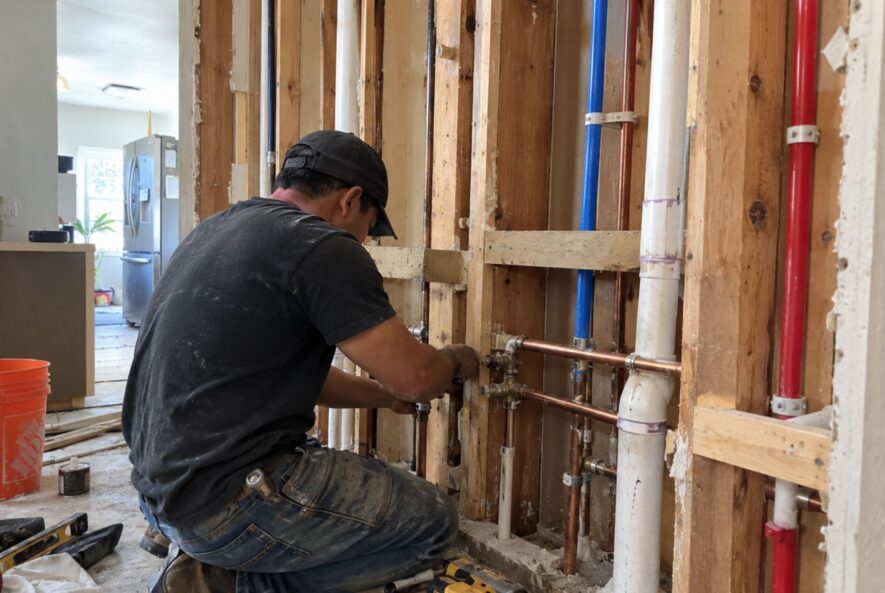
A whole-house repipe takes anywhere from a few days for a smaller home to several weeks for a large, multi-story home with many fixtures. Bathrooms, floors, and wall access set the pace. Most jobs move through the same phases: assessment, permit, opening walls, running new pipes to each fixture, testing and inspection, then patching. When we assess a home, we give a realistic timeline up front.
Expect noise, dust, and planned stretches without a water supply while the crew works through the entire home. Homeowners often ask us whether they can stay home during the work. That depends on the size of the job and how long the water is off each day, so ask for a day-by-day plan and clear space around sinks, toilets, and showers.
Full vs. partial repipe: which do you need?
You need a full repipe of the entire house when the whole plumbing system is failing, with widespread corrosion or leaks that keep showing up in different places. A partial repipe makes sense when the trouble is limited to one area, such as a corroded section near the water heater or the lines feeding one bathroom.
Partial work costs less up front and suits plumbing issues confined to one spot, but if the rest of the old system is in the same shape, it can turn into a string of repairs. We’ll tell you honestly whether a partial repipe fixes the actual problem or just chases leaks.
How often should a house be replumbed?
There’s no set schedule for replumbing a house. A home needs new plumbing when its pipe material or condition calls for it, not on a calendar. Angi lists galvanized and lead pipes among the signs a home needs new pipes, along with recurring leaks and visible corrosion. Old pipes that are still sound, with no plumbing problems, don’t need replacing early.
Is repiping a house worth it?
A repipe is a significant investment, but it’s usually worth it when repairs keep coming back or the pipe material itself is the problem. At some point, a planned repipe costs less than repeated repairs and the water damage that comes with them. Angi notes it can also increase a home’s value. If you’ve had one isolated leak in otherwise healthy pipe, a repair is usually the smarter move.
Signs it’s time to repipe
The clearest sign is frequent leaks, especially pinhole leaks that show up in new spots after each repair. Visible corrosion on exposed pipe is another. Our article on what causes corrosion on copper pipes explains why it happens. When old galvanized steel pipes rust from the inside, you may see rusty colored water at the tap. Our guide to brown water from the faucet covers other causes worth ruling out first.
Dropping water pressure, weak water flow, temperature swings, and poor water quality are also worth a closer look. Lead pipe is its own category. According to the EPA, homes built before 1986 are more likely to have lead pipes, and a water test is how you confirm whether lead is present. If you suspect it, start with the EPA’s lead in drinking water guidance.
How to tell if a plumber is overcharging you
Labor costs make up most of a repipe bill, so compare labor costs first when you’re checking for overcharging. The surest way to spot a padded bid is to get an itemized written quote and compare it with two or three others for the same scope. Angi’s plumber cost data puts hourly rates at $45 to $200, and hourly billing is the industry standard. Before you sign a home repipe quote, make sure you can answer these questions:
- Is it a full or partial repipe, and which fixtures are covered?
- Which pipe material is quoted, and is it allowed by local code?
- Are permits and inspections included in the price?
- Is the price hourly or flat rate, and what could change it?
- Is the contractor licensed and insured in your state?
A very low bid can leave out permits or wall repair.
Conclusion
Whole-house repipe costs usually run $1,500 to $15,000, with a typical job around $7,500 and labor costs making up about 70% of the bill. Budget for permits and drywall repair, and expect a few days to several weeks of work.
All State Plumbing Pros can assess your plumbing system and give you upfront material and price options. We’re licensed and insured in Connecticut and Westchester County, NY, and we handle repiping, water heater installation, drain cleaning, and 24/7 emergency service. Contact us for a free estimate or call (203) 456-3636. You can also browse our other services from the All State Plumbing Pros homepage.
FAQs
How much does it cost to repipe a house?
Most whole-house repipes cost $1,500 to $15,000, and many homeowners pay around $7,500. House size, number of fixtures, pipe material, and wall access drive the final price.
How long does it take to repipe a house?
A whole-house repipe takes a few days for a smaller home and up to several weeks for a large, multi-story home with many fixtures. Your plumber should give you a timeline before work starts.
Is repiping a house worth it?
Repiping is usually worth it when leaks keep recurring, or you have galvanized pipes, lead pipes, or heavy corrosion. For one isolated leak in healthy pipe, a repair is usually the better choice.
Do plumbers prefer PEX or copper?
Many plumbers prefer PEX for repipes because it’s flexible, corrosion-resistant, and cheaper per foot. Copper is very durable but costs more, and some building departments restrict PEX.
Can you repipe one section at a time?
Yes. A partial repipe replaces only the failing sections, such as one bathroom or the lines near the water heater, and costs less up front than a full repipe.