Sewer line replacement cost: 2026 pricing guide
Sewer line replacement typically costs between $50 and $250 per linear foot. Most full residential jobs land between $3,000 and $10,000, depending on pipe length, depth, and the replacement method. A standard 40 foot lateral line falls toward the middle of that range for a straightforward dig and replace job. Trenchless methods such as pipe bursting or CIPP lining often cost more per foot, but they can save money overall by skipping full yard restoration. Homes with unusually long runs, deep pipes, or driveways sitting on top of the line tend to land at the higher end.
Fairfield County, Connecticut and Westchester County, New York both have a lot of older housing stock, and that matters here. Towns like Danbury, New Milford, Ridgefield, Wilton, and Bethel still have plenty of homes built decades ago with clay or cast iron sewer laterals. Those materials crack and corrode over time. They also invite tree roots in a way modern PVC does not. Newtown and Brookfield have similar issues, since much of that housing stock predates the shift to plastic piping. Across the river in Westchester, older suburbs around White Plains and Mount Kisco carry the same risk. Aging clay lines there were never built to last a century.
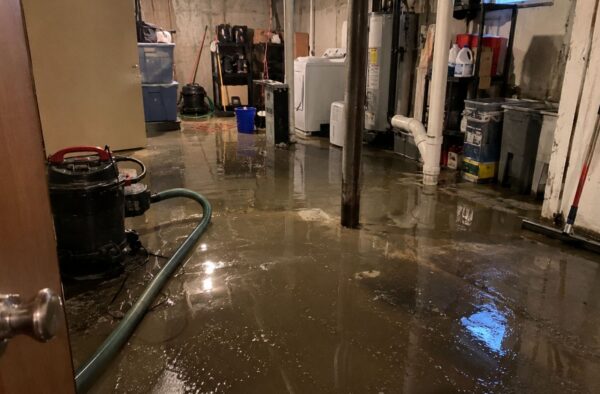
A failing sewer line rarely announces itself politely. Slow drains, gurgling toilets, and sewage odors in the yard are warning signs the line needs attention now, not next month. A full collapse can mean raw sewage backing up into the house. All State Plumbing Pros has handled sewer line replacements across both counties for years. Our residential plumbing team can inspect your line, confirm the actual damage, and give you a real number instead of a guess pulled from a national average.
Sewer line replacement cost by method
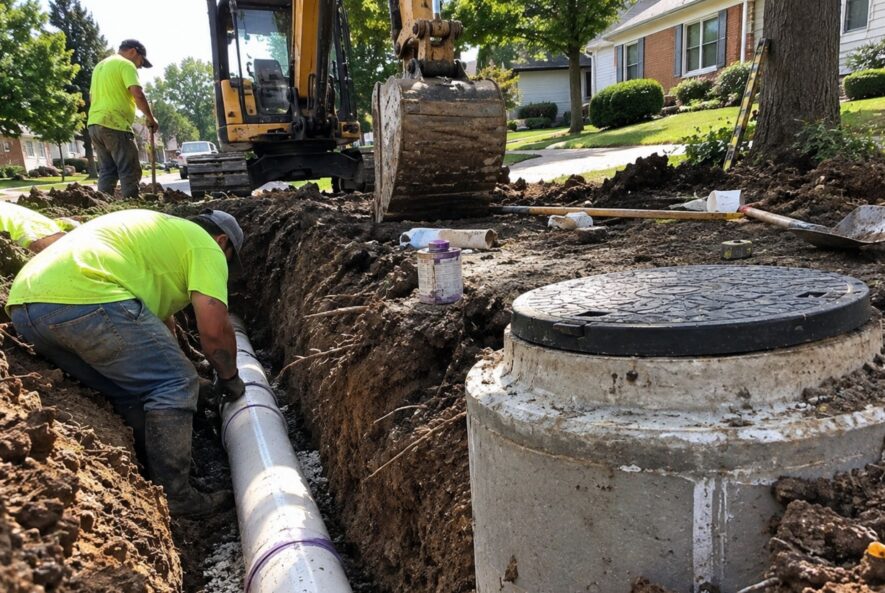
The method used to replace your sewer line affects both the per foot price and the total project cost. Traditional excavation, sometimes called dig and replace, involves trenching along the entire pipe run. The old pipe comes out, new pipe goes in, then the crew backfills and restores the surface. Trenchless methods skip most of that digging. A crew either bursts the old pipe apart while pulling a new one through, or lines the existing pipe with a resin sleeve that cures into a new pipe inside the old one.
| Method | Cost per linear foot | Typical full-job range |
| Traditional dig and replace | $50 to $250 | $3,000 to $10,000 |
| Pipe bursting (trenchless) | $60 to $200 | $4,000 to $12,000 |
| CIPP pipe lining (trenchless) | $90 to $250 | $4,500 to $15,000 |
These figures come from Angi’s 2026 sewer line cost data and reflect national averages. Local pricing shifts based on labor rates, permit requirements, and pipe depth. That is why an in person inspection still beats any online calculator.
Traditional excavation
Dig and replace is the most direct method. It is often the cheapest option when the pipe run is short and easy to access. It requires opening a trench the full length of the pipe, so any lawn, driveway, or landscaping above the line gets disturbed and needs repair afterward. For a straightforward front yard line with no obstacles, this is frequently the most economical choice, even after restoration costs are added in.
Trenchless pipe bursting
Pipe bursting pulls a new pipe through the path of the old one. A bursting head fractures the original pipe outward into the surrounding soil as it goes. The method needs only two small access pits rather than a full trench, which limits surface damage. It works well for lines with consistent diameter and no major offsets. It is not always suitable for pipes with severe bellies or collapsed sections.
CIPP pipe lining
Cured-in-place pipe, or CIPP, involves inserting a resin-soaked liner into the existing pipe. Heat or UV light cures the liner until it hardens into a new pipe wall inside the old one. It works well for pipes that are cracked or leaking but still structurally intact enough to hold a liner. It cannot fix a fully collapsed section, and it slightly reduces the interior diameter of the pipe.
What affects your total sewer line replacement cost
Pricing swings widely because so many site specific variables come into play. Before we quote a job, we look at:
- Pipe length: Longer runs cost more in materials and labor, though the per foot price sometimes drops slightly on longer jobs as fixed setup costs get spread out.
- Depth: Lines buried more than 6 to 8 feet down need more excavation, shoring, and safety precautions, which raises labor cost.
- Pipe material: PVC is inexpensive to install. Cast iron and clay removal costs more, since the old material is heavier and more brittle to extract.
- Access and obstacles: A line running under a driveway, patio, mature trees, or a retaining wall adds cutting, removal, and restoration costs on top of the base pipe work.
- Soil conditions: Rocky, high water table, or unstable soil slows excavation and can require extra shoring or dewatering equipment.
- Permit and inspection fees: Most towns in Fairfield County and Westchester County require a permit for sewer lateral work, and fees vary by municipality.
- Restoration work: Repouring concrete, replacing sod, or rebuilding a section of driveway after excavation is a separate line item homeowners sometimes forget to budget for.
A short, shallow, easily accessed PVC line replacement sits near the bottom of the cost range. A long, deep clay line running under a paved driveway with poor soil conditions sits near the top. It can exceed that range once restoration is included.
Trenchless vs. traditional: which costs less overall
On a pure per-foot basis, traditional excavation is often the cheaper option, especially for short runs in open yards with easy digging. But that comparison misses half the picture. Add driveway removal, mature landscaping replacement, or fence and hardscape repair, and a trenchless method can end up costing less overall, even with a higher per-foot rate, because it skips most of that restoration work.
The right call depends on your yard. A rear yard sewer line with grass and nothing else above it usually favors traditional dig and replace. A line running under a paved driveway, a finished patio, or an established garden usually favors trenchless, assuming the pipe condition allows for it. Our drain cleaning and sewer line team walks the site, runs a camera inspection, and lays out both options with real numbers so you are not guessing between them.
Does homeowners insurance cover sewer line replacement
Generally, no. Standard homeowners insurance policies exclude damage caused by normal wear, aging pipes, tree root intrusion, or ground shifting. Insurers treat those as maintenance issues rather than sudden accidents. As Progressive explains, damage from faulty construction, poor upkeep, or tree roots is typically excluded from a standard policy. Some insurers offer a separate service line endorsement that specifically covers underground pipe repair, so it is worth checking whether your policy already includes one. We cover this question in more depth, including what documentation you need for a claim, in our article on whether homeowners insurance covers sewer line replacement.
Because most homeowners end up paying out of pocket, an accurate, itemized quote matters more here than it would for an insured repair. We break down materials, labor, permits, and restoration separately so you know exactly what you are paying for and why.
Conclusion
Sewer line replacement in Fairfield County and Westchester County typically runs $3,000 to $10,000 for a full lateral, with per-foot pricing between $50 and $250 depending on whether you go traditional or trenchless. Pipe length, depth, material, access obstacles, and restoration work all move that number up or down. Homeowners insurance rarely covers the cost, since most failures come from age and wear rather than a sudden accident. A camera inspection before any digging starts is the fastest way to know which method fits your line and what the real number looks like.
If you are seeing warning signs like slow drains, sewage smells, or a soggy patch in the yard, do not wait for a full backup. All State Plumbing Pros provides sewer line inspection, drain cleaning, water heater repair, emergency plumbing, and both residential and commercial plumbing service throughout Fairfield County and Westchester County. Call (203) 456-3636 or contact us to schedule a camera inspection and get a firm, written quote for your sewer line replacement.
FAQs
How much does sewer line replacement cost per linear foot?
Sewer line replacement generally costs $50 to $250 per linear foot. Traditional dig and replace tends to sit at the lower end for easy access jobs, while trenchless methods like CIPP lining run higher per foot but often avoid separate restoration costs.
What is the average total cost to replace a sewer line?
Most full sewer line replacements cost between $3,000 and $10,000, with a national average around $3,300 to $6,000 for a standard 40-foot residential lateral. Longer runs, deeper pipes, and driveway or landscaping restoration can push the total higher.
Is trenchless sewer line replacement cheaper than digging?
Not always on a per-foot basis. Traditional excavation is often cheaper for short, easy-to-access runs. Trenchless methods can end up costing less overall when a driveway, patio, or mature landscaping would otherwise need to be removed and rebuilt.
How long does sewer line replacement take?
A straightforward traditional replacement usually takes one to three days, including excavation, pipe installation, and backfilling. Trenchless methods like pipe bursting or CIPP lining are often finished in a single day, since they avoid a full trench, though surface restoration afterward can add time either way.
Does homeowners insurance cover sewer line replacement?
Standard homeowners insurance usually does not cover sewer line replacement when the cause is age, wear, tree roots, or ground shifting. Some insurers offer a separate service line endorsement that covers this specifically, so it is worth checking your policy or asking your agent before assuming you are covered.