How Long Does a Well Pump Last? (And What Shortens Its Life)
Most submersible well pumps last 8 to 15 years, while above-ground jet pumps typically last 5 to 10 years, with well-maintained systems on clean water sometimes reaching 20 years or more. Water quality, pump sizing, and how often the pump cycles on and off all affect where in that range your pump lands. On calls throughout Fairfield County’s well-water towns, we see plenty of pumps fail early and plenty run well past 15 years — the difference almost always traces back to maintenance and water conditions.
What’s the Real Lifespan by Pump Type?
Submersible pumps, which sit down inside the well casing, generally outlast jet pumps that sit above ground and pull water up by suction. Submersibles typically run 8 to 15 years; jet pumps run 5 to 10 years because they work harder against suction limits and are more exposed to temperature swings (America’s Choice Inspections).
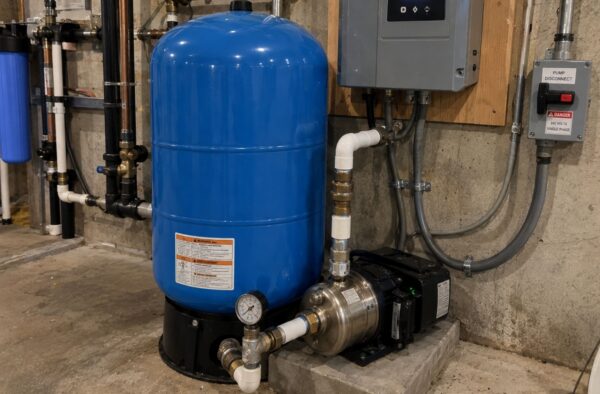
The pressure tank that works alongside the pump has its own lifespan, usually 7 to 12 years, and a failing tank often gets mistaken for a failing pump. The well itself — the drilled hole, casing, and screen — can last 40 to 50 years or longer, so in most cases you’re replacing pumps and tanks multiple times over a well’s life, not the well.
What Shortens a Well Pump’s Life?
Sand and sediment in the water are the biggest culprits we see, since fine grit works through the pump’s impeller and seals like slow-motion sandpaper. Wells in parts of New Milford and New Fairfield with sandier soil conditions tend to show this wear pattern earlier than pumps in cleaner aquifers.
An undersized or oversized pump also shortens life significantly — a pump working too hard to meet household demand short-cycles constantly, and each start-stop cycle stresses the motor windings. Low water levels in the well during dry summer stretches can cause a submersible pump to run dry momentarily, which is one of the fastest ways to burn out a motor.
Does Iron and Hard Water Affect Well Pump Life?
Yes — iron bacteria and mineral-heavy water, common in private wells across Fairfield County, can coat pump components and valves in scale and slime over time. This buildup makes the motor work harder to move the same volume of water, generating more heat and wearing bearings faster.
We cover how mineral buildup affects fixtures and appliances more broadly in our limescale buildup guide, and the same chemistry that scales a water heater scales a well pump’s internals.
What Are the Warning Signs a Pump Is Near the End?
Pulsing or sputtering water flow, a pump that cycles on and off rapidly even with taps closed, unusually high electric bills, and cloudy or gritty water are all signals worth investigating before a pump fails completely. Air in the lines or a sudden total loss of water pressure often means the pump has already failed or lost prime.
We detail the full list of red flags in our signs of well pump failure guide. If your system has lost prime and won’t draw water at all, our priming a well pump guide walks through that specific fix, and no water from well covers total loss of supply.
How Much Does Well Pump Replacement Cost?
Well pump replacement typically runs $1,500 to $4,000 fully installed, with the national average landing around $1,900, according to Angi’s cost data. Well depth is the single biggest driver of cost — every additional 100 feet of depth adds meaningful cost in pipe, wire, and labor, since a deeper well needs a longer drop pipe and more powerful motor to lift water that far.
A shallow well jet pump replacement tends to land at the lower end of that range, while a submersible pump in a deep well runs toward the higher end. Getting an accurate quote requires knowing your well depth, which is worth having on hand before you call for pricing.
Can Regular Maintenance Extend Pump Life?
Yes, meaningfully. Annual system checks that verify pressure tank air charge, inspect the pressure switch, and listen for unusual motor sounds catch small problems before they become pump-killing ones. Testing water quality periodically also flags sediment or iron issues early enough to address with filtration rather than letting them grind away at the pump.
We walk through the specific maintenance tasks that matter most in our well pump maintenance guide — most take a plumber under an hour during a routine visit and cost far less than an emergency replacement.
DIY vs. When to Call a Plumber
Checking pressure tank air charge with a tire gauge, listening for unusual pump cycling, and monitoring water clarity are all things a homeowner can reasonably track. Pulling a submersible pump out of a well casing requires a well rig or specialized hoist, proper handling of the drop pipe and electrical wiring, and knowledge of local well code — this is not a DIY project under any circumstances.
Electrical work at the wellhead also carries real shock risk given the water involved, and a poorly seated replacement pump can drop into the well or damage the casing. If your pump needs replacing, that’s licensed-plumber territory from the first step.
Frequently Asked Questions
How do I know if it’s the pump or the pressure tank?
A waterlogged pressure tank causes short-cycling and pressure swings similar to pump problems, but a plumber can distinguish the two by checking tank air pressure and testing pump amperage draw. Don’t assume it’s the pump without that diagnostic step — a $50 tank recharge is a lot cheaper than an unnecessary pump swap.
Can a well pump be repaired instead of replaced?
Sometimes. Pressure switches, capacitors, and control boxes can often be repaired or swapped without pulling the whole pump. But if the motor or impeller itself has failed, full replacement is usually more cost-effective than repair.
How long does a well pump replacement take?
Most residential well pump replacements are completed in a single day, though deeper wells or difficult wellhead access can extend the job.
Do I need a permit to replace a well pump in Connecticut?
Requirements vary by town, and a licensed plumber handling your replacement will know what’s required in your specific municipality across Fairfield County.
What size well pump do I need?
Sizing depends on well depth, static water level, and your household’s peak water demand — this should be calculated by a plumber rather than guessed, since an undersized or oversized pump fails early either way.
Should I replace my pressure tank at the same time as my pump?
If your tank is more than 7-10 years old, replacing both at once often makes sense since you’re already paying for the labor and access, and a failing old tank will just stress the new pump.
Need Help Now?
If your well pump is showing warning signs or you’re not sure whether it’s the pump or the tank, call All State Plumbing Pros. We serve well-water homes throughout Danbury, New Milford, Ridgefield, and the rest of Fairfield County with same-day diagnostics and 24/7 emergency service. Get in touch today before a small issue turns into a dry well.
Frequently Asked Questions
See FAQ block above.