Old house plumbing problems in Fairfield & Westchester County
The most common old house plumbing problems are corroded galvanized supply lines, aging cast iron drains, and clay or Orangeburg sewer lines. Homes built before 1986 can also have lead in the service line or solder. Houses from the late 1970s to the mid-1990s may have polybutylene. Each of these outdated pipes gives warning signs long before aging plumbing systems fail outright.
Many old houses in Fairfield County and Westchester County were built decades ago and updated in pieces since. A historic home in Danbury, Ridgefield, Wilton, or New Milford can hold several generations of pipe. Original cast iron pipes might sit next to mid-century galvanized pipes and copper pipes from a newer remodel.
As a licensed and insured plumbing company based in Danbury, All State Plumbing Pros knows these houses well. We handle everything from one corroded fitting to a full repipe.
What type of plumbing do old houses have that’s bad?
The plumbing materials behind the most common plumbing problems are galvanized steel and lead for supply, and cast iron, clay, and Orangeburg for drains and sewers. The table shows where each turns up in older homes and what goes wrong.
| Material | Where you’ll find it | What goes wrong | Typical warning signs |
| Galvanized steel | Water supply lines, often in homes built before the 1960s | Zinc coating wears off, and the pipe rusts and narrows inside | Low water pressure, brown or yellow water |
| Lead | Service line from the street, plus lead solder and brass fixtures in older homes | Lead can dissolve into drinking water | None you can see, taste, or smell; only a test confirms it |
| Cast iron | Drain lines and the main stack | Internal corrosion and scale | Recurring slow drains, rust on the pipe, sewer odor |
| Clay | Buried sewer lateral | Cracks and root intrusion | Backups, gurgling drains, sewer odor |
| Orangeburg | Buried sewer lateral | Flattens out of round, roots get in | Repeated sewer backups |
| Polybutylene | Supply lines in homes built from the late 1970s to the mid-1990s | Turns brittle and cracks | Leaks or sudden ruptures |
Galvanized steel pipes
Galvanized steel pipes rust from the inside, and that rust slowly chokes off your water flow. Once the zinc coating wears away, rust narrows these corroded pipes. The result is low water pressure in the house, weak flow at upstairs fixtures, and discolored water. Rust flakes from old plumbing pipes can also clog faucet aerators, which is often an early clue. In our experience, a house with rusty galvanized pipes rarely has just one bad section, because the home’s plumbing aged together.
Lead service lines and lead solder
Lead pipes are most likely in homes built before 1986, and lead can enter drinking water when plumbing materials that contain it corrode. When a home has a lead service line, that line is usually the biggest source. Otherwise, the EPA’s guidance on lead in drinking water says the most common problems are brass or chrome-plated brass faucets and lead solder. You can’t see, taste, or smell lead, so testing is the only sure way to know, and EPA puts testing costs at $20 to $100.
If you’re on town water, ask your utility whether your service line is lead, or have a licensed plumber check it. Until you know, use only cold water for drinking and cooking, and remember that boiling water does not remove lead.
Cast iron drain pipes
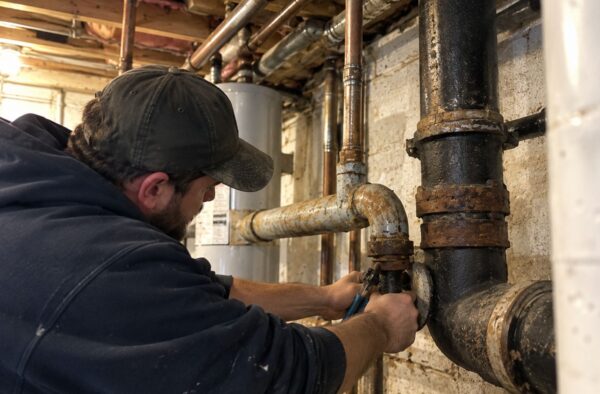
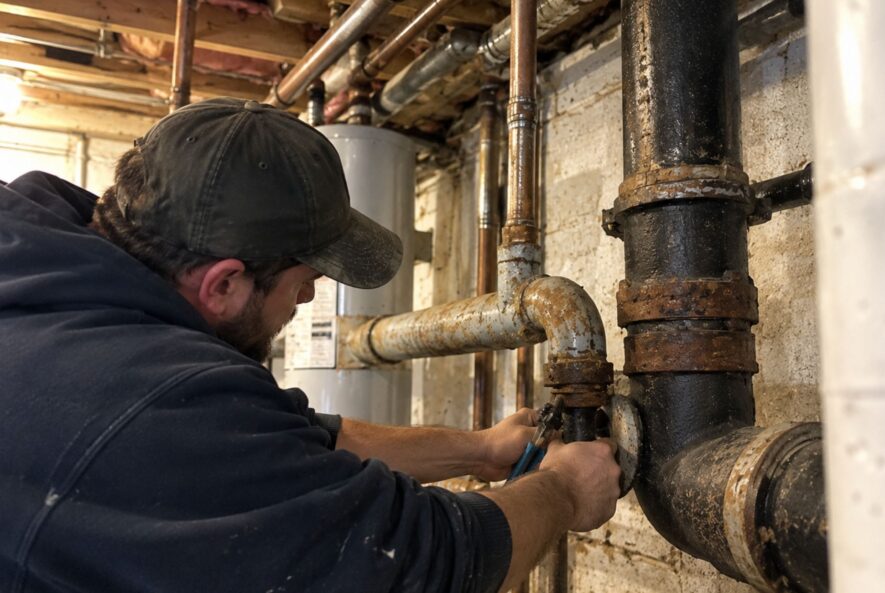
Cast iron drain lines can last 50 to 100 years, but many cast iron pipes cause trouble long before they fail. Inside, the pipe corrodes and builds up scale, so hair, grease, soap scum, and other debris cause clogged drains more easily. We see a lot of original cast iron stacks in older Danbury and Westchester homes. Watch for slow drains that keep coming back, rust on the pipe, and foul odors in the basement.
Clay and Orangeburg sewer lines
Old sewer lines made of clay or Orangeburg crack and let tree roots in as they age, and Orangeburg also flattens out of round. HomeGuide puts the lifespan of clay and Orangeburg sewer lines at 30 to 60 years. Shifting foundations damage faulty sewer lines too, and some lines develop pipe bellies, sagging sections that cause slow drainage. Repeated sewer backups are a common sign of sewer line failure. Homeowners are generally responsible for the lateral from the house to the street main. A sewer camera inspection typically costs $125 to $500 and shows the pipe’s condition before anyone digs.
Polybutylene supply pipe
Polybutylene is a plastic supply pipe found in many homes built from the late 1970s to the mid-1990s. Chlorine and other oxidants in public water systems make it brittle. That can cause leaks or sudden ruptures, even in pipe that has never leaked. Look for flexible plastic pipe stamped “PB2110.” Angi notes it is not up to current U.S. building codes. If you find it, plan to replace it, and confirm your homeowners policy covers damage from burst pipes.
Hidden leaks and water stains
Leaky pipes in older homes often stay hidden until they show up as water stains on a ceiling. A supply-line leak can also push up your water bill without any change in use. Small leaks add up: EPA WaterSense estimates the average household’s leaks can waste more than 9,300 gallons of water a year. To check, read your water meter, use no water for two hours, and read it again. Any change suggests a leak.
Worn shutoff valves and outdoor faucets
Old gate valves often fail at the moment you need them. On a worn one, the handle spins without moving the internal gate, so the water only shuts off partway. We usually recommend swapping it for a quarter-turn ball valve before you need an emergency plumber. Check outdoor faucets too. A standard spigot can freeze because its supply pipe sits outside the heated house, while a frost-proof spigot drains itself when shut off.
Amateur repairs from previous owners
Decades of DIY fixes are the other hidden variable in an old house. Common finds include unsecured pipes, sink traps installed incorrectly, unsafe water heaters, and steel pipe joined directly to copper. Without a dielectric union, that last pairing causes electrolysis, a corrosion that can rot through a pipe.
Should you buy a house with old plumbing?
Yes, an older home can be a sound purchase if you know what you’re inheriting and factor necessary repairs into your offer. Many homeowners ask us whether galvanized pipe or cast iron drains are deal-breakers. Usually not, but they’re fair negotiating points. Before you close, have a professional plumber do a plumbing inspection plus a sewer camera inspection. If the house is on septic rather than town sewer, our guide to septic vs. sewer for Fairfield County buyers covers what to ask.
Can you sell a house with plumbing issues?
Yes, plumbing issues don’t stop a sale, but they affect price and negotiations. In Connecticut, sellers of most one- to four-unit homes must give buyers a written residential property condition report before the sale is executed, so disclose the plumbing problems you know about. If you’re selling in New York, ask your agent or attorney what you need to disclose.
What does a plumbing inspection cost, and what should it check?
A thorough inspection can reveal hidden plumbing problems and outdated materials before they become costly plumbing repairs. Get one before buying and after any major problem. In older homes, we check these first:
- The main shutoff valve, and whether it actually closes
- The service line where it enters the house: lead, galvanized, or copper
- Supply pipe in the basement, especially galvanized, polybutylene, or a patchwork of materials
- Water pressure and color at an upstairs faucet
- The cast iron stack, checking for rust, cracks, or weeping joints
- A camera view of the sewer lateral if the house is on town sewer
For a fuller room-by-room list, use our home plumbing inspection checklist.
Repair, replace, or repipe?
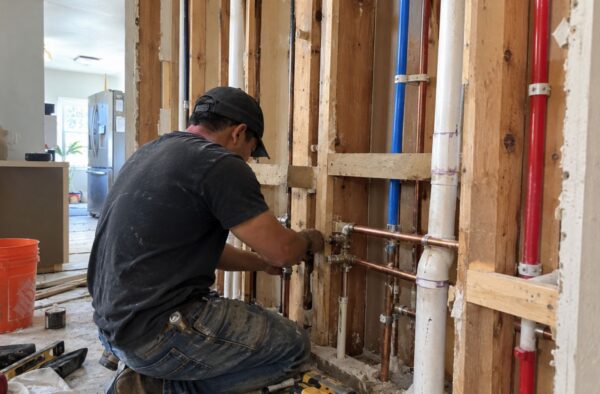
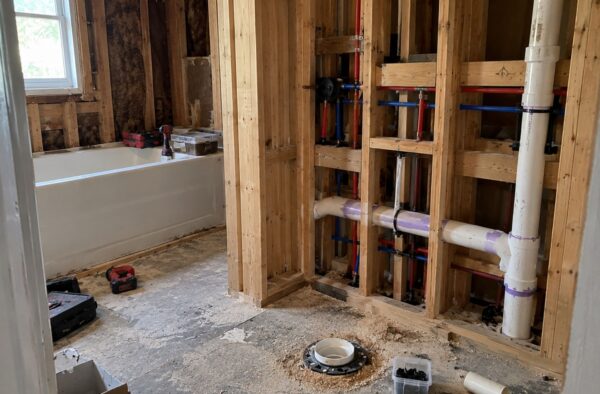
Repair makes sense when the problem is isolated. A repipe makes sense when the same material is failing throughout the house. One leaking fitting on old pipes can often be fixed on its own. Widespread corrosion in galvanized pipes, any polybutylene, or repeated leaks in different spots usually point to new supply lines in modern materials. All State Plumbing Pros offers partial and whole-home repiping. A whole-home repipe is a multi-day project, so plan it rather than wait for a failure.
Conclusion
Most plumbing problems in older homes come down to materials reaching the end of their useful life. Lead is the one issue you can’t spot by sight, so testing comes first in any home built before 1986. After that, check the shutoff and the sewer lines, and fix the highest-risk plumbing issues before they turn into costly repairs.
All State Plumbing Pros helps homeowners in Fairfield County, CT and Westchester County, NY figure out what’s in their walls and what to do about it. We’re licensed and insured, and we handle repiping, sewer line inspection and repair, drain cleaning, and general residential plumbing service, with 24/7 emergency service when something can’t wait. Call (203) 456-3636 or contact our team to schedule a look at your older home.
FAQs
How do I know if my house has lead pipes?
Ask your water utility whether your service line is lead, or have a licensed plumber check it. Because lead can’t be seen, tasted, or smelled, a water test is the only sure answer.
How long do cast iron drain pipes last?
Cast iron pipes in drain and sewer lines can last 50 to 100 years. Many develop internal scale and corrosion well before that, so a camera inspection is worth it in an older home.
How much does it cost to replumb an old house?
Angi puts a whole-house repipe at $1,500 to $15,000, and most homeowners pay around $7,500. Local quotes vary with house size, access, and pipe material.
What is Orangeburg pipe?
Orangeburg is a sewer pipe made of paper and tar, popular for decades after World War II. With age, it flattens and lets tree roots in, which causes repeated backups.
Do I need to repipe an old house?
Not always. If only one section is failing, a partial repipe may be enough. Widespread corrosion or repeated leaks usually call for a full repipe.