Toilet installation cost: what homeowners pay in CT & NY
Most homeowners pay between $224 and $650 for professional toilet installation. The national average is around $374. That figure covers a standard two-piece toilet and straightforward removal of the old fixture. Prices climb from there depending on the toilet you choose, the condition of your flooring, and whether the plumber runs into surprises once the old unit comes out.
In Fairfield County, CT, and Westchester County, NY, that baseline usually shifts a bit higher. Older housing stock in towns like Danbury, Ridgefield, New Milford, and Wilton often means outdated wax rings and corroded flanges. Shutoff valves in these homes sometimes haven’t been touched in decades. Homeowners in Westchester face similar issues, particularly in homes built before 1970 where cast iron drain lines and original subfloors are still common. Labor rates here also run somewhat above the national median. That reflects the region’s cost of living and the added complexity of retrofitting older bathrooms.
If your toilet rocks on the floor, runs constantly, or has needed three repairs this year, replacement often costs less over time than continuing to patch it. A cracked tank or a flange that’s rusted through isn’t a job to defer. A failed seal can let water seep into the subfloor and turn a $300 repair into a $2,000 flooring project. All State Plumbing Pros handles toilet installation and replacement throughout the region as part of its residential plumbing services, with upfront pricing before any work begins.
Average toilet installation cost by type
The toilet itself typically makes up less of the bill than people expect. Labor, not the fixture, drives most of the total. Here’s how pricing breaks down by toilet style, based on 2026 national cost data.
| Toilet type | Unit cost | Installed cost (with labor) |
| Standard two-piece | $100 to $300 | $224 to $450 |
| One-piece | $300 to $600 | $500 to $900 |
| Comfort height | $150 to $400 | $300 to $600 |
| Dual-flush | $150 to $500 | $350 to $700 |
| Pressure-assisted | $250 to $600 | $450 to $900 |
| Smart or bidet toilet | $600 to $2,000+ | $900 to $2,500+ |
Installation labor alone generally runs $150 to $450. A plumber may charge $75 to $200 an hour depending on the job’s complexity, and whether it’s scheduled during regular hours or as an emergency plumber call. A straightforward swap, same toilet footprint, same drain location, usually takes one to two hours.
Standard two-piece toilets
This is the most common toilet sold in the US. It’s usually the cheapest to install, too, because parts are widely stocked and every plumber knows the process. Expect to pay toward the lower end of the range unless your existing flange or supply line needs work.
Comfort height and one-piece models
Comfort height toilets sit a couple of inches taller than standard models, which makes them easier on knees and backs. One-piece toilets cost more because the tank and bowl are molded as a single unit, which simplifies cleaning but raises the manufacturing cost. Neither style changes installation time much compared to a standard toilet.
Dual-flush and water-saving toilets
Dual-flush toilets offer a partial flush for liquid waste and a full flush for solid waste. This cuts water use substantially over time. Older toilets can use as much as 6 gallons per flush. WaterSense labeled toilets, by comparison, use 1.28 gallons per flush or less, and that gap adds up fast over a year of daily use. Many CT and NY municipalities also offer rebates for WaterSense fixtures, which can offset part of the installed cost.
Smart and bidet toilets
Smart toilets with heated seats, built-in bidets, or automatic flush sensors cost the most upfront. They sometimes require an electrical outlet near the toilet, which adds another line item if your bathroom doesn’t already have one. Installation on these units takes longer, too, since wiring and settings need to be checked before the job is done.
What affects your final toilet installation cost
A quote can move well outside the average range once a plumber sees what’s actually happening under the old toilet. The factors that most often change the price:
- Removing and hauling away the old toilet, typically $50 to $200
- Replacing the wax ring or flange, especially if the old one is cracked, rusted, or sitting below the finished floor
- Repairing or replacing damaged subfloor from a slow leak that went unnoticed for months
- Moving the toilet’s drain location, which requires cutting into the floor and rerouting the waste line
- Upgrading old or corroded shutoff valves and supply lines while the toilet is already disconnected
- Matching the toilet’s rough-in measurement, the distance from the wall to the drain, since a mismatch can mean returning the unit entirely
A flange replacement alone can run $145 to $300. The price depends on whether it needs to be reset in concrete or tied into cast iron pipe, which is still common in older Fairfield County and Westchester homes. If the plumber finds subfloor rot once the toilet is off, that’s a separate repair, priced by square footage of damaged material, not part of the toilet install itself. Homeowners can get ahead of this by working a home plumbing inspection checklist into their annual maintenance routine, catching a slow leak before it reaches the floor joists.
According to Angi’s national cost data, unexpected pipe or valve repairs during a toilet swap can add $150 to $850 to the original quote. That’s a wide gap. It’s worth asking your plumber to inspect the flange and shutoff valve before finalizing a price, rather than after the old toilet is already out.
Signs your toilet needs replacing, not another repair
A toilet that runs constantly, rocks when you sit down, or has a hairline crack in the tank or bowl is usually past the point where another repair makes sense. If you’ve called a plumber out for the same toilet more than twice in a year, the math tends to favor replacement. Persistent clogs that a plunger and auger can’t clear can also point to an outdated trap design. That’s especially true in toilets installed before the early 1990s, since a modern fixture simply flushes better. For a broader rundown of warning signs across your whole plumbing system, see signs you need a plumber.
A running toilet specifically is sometimes fixable with a new flapper or fill valve rather than a full replacement. If yours has just started running intermittently, it’s worth trying that fix first. Our guide on how to stop a toilet from running walks through the most common causes before you spend money on a new unit.
DIY toilet installation vs. hiring a plumber
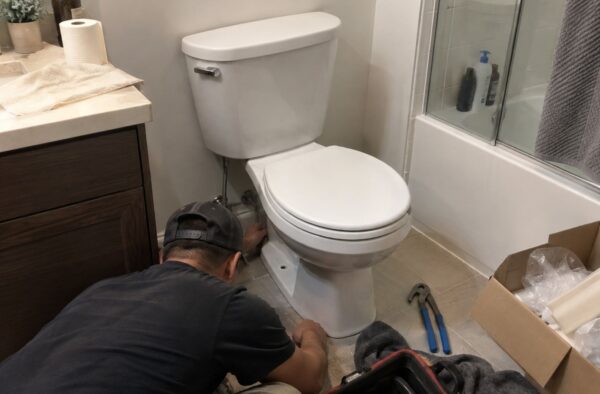
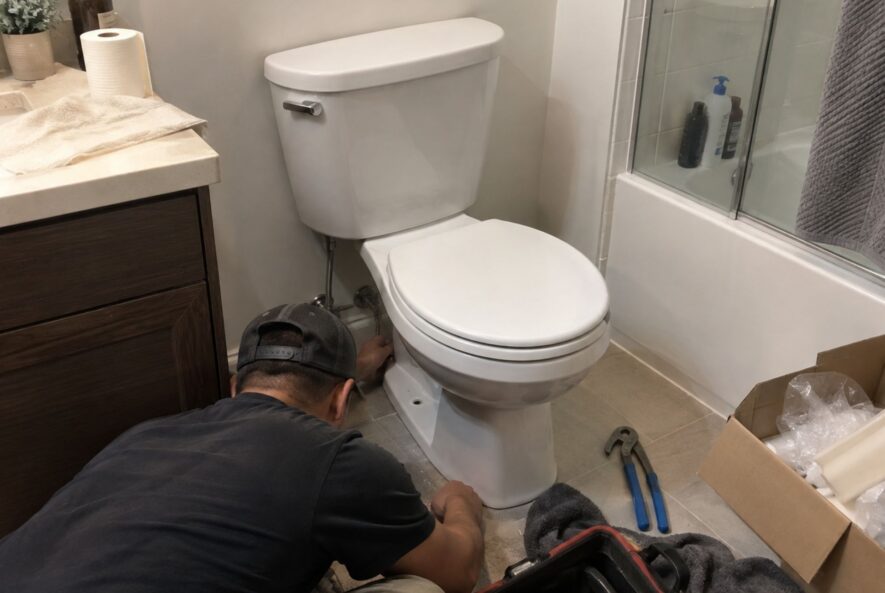
Installing a toilet looks simple on paper. Set the new wax ring, lower the toilet onto the flange, bolt it down, and reconnect the water. In practice, a toilet that isn’t seated evenly on the flange will rock slightly with every use. That rocking slowly breaks the wax seal and lets sewer gas or water leak into the subfloor. This kind of failure often isn’t obvious until the floor around the base starts to soften.
A licensed plumber also knows what to check that a first-time DIYer might miss. Does the flange sit at the correct height relative to the finished floor? Is the shutoff valve original, and likely to fail once it’s turned? Does the rough-in measurement actually match the new toilet before it’s unboxed? Getting these details right the first time is part of why hiring a licensed plumber tends to cost less in the long run than a DIY job that needs correcting later.
Typical toilet installation steps
- Shut off the water supply and drain the tank and bowl
- Disconnect the supply line and remove the old toilet
- Scrape away the old wax ring and inspect the flange for damage or corrosion
- Replace the flange or shims if it’s cracked, loose, or sitting at the wrong height
- Set a new wax ring and lower the new toilet into place, checking that it sits flush and doesn’t rock
- Bolt the toilet to the flange and reconnect the water supply
- Test for leaks at the base and supply line, then flush several times to confirm proper operation
Most of these steps take minutes individually. Skipping the inspection in step 3, though, is the most common reason a toilet install needs a repeat visit within a year.
Conclusion
Toilet installation cost in Fairfield County and Westchester County generally falls between $224 and $650 for a standard swap, with smart and one-piece models running higher. The bigger cost swings come from what’s found once the old toilet is removed. A damaged flange. A rotted subfloor. Supply lines too old to reuse safely. Getting an accurate quote means having someone inspect those details before, not after, the job starts.
All State Plumbing Pros installs and replaces toilets throughout Danbury, New Milford, Ridgefield, Wilton, Bethel, Newtown, Brookfield, and Westchester County. We also handle drain cleaning, water heater repair and installation, well pump service, and commercial plumbing work. Every technician is licensed in Connecticut and Westchester. Every quote is provided before work begins. Contact us to schedule an inspection, or visit our homepage to see the full range of services we offer across the region.
FAQs
How much does it cost to install a toilet?
Most homeowners pay $224 to $650 for professional toilet installation, including removal of the old unit and a standard new toilet. Costs run higher for one-piece, pressure-assisted, or smart toilets. They can increase further if the flange or subfloor needs repair.
How much does it cost to replace a toilet flange?
Flange replacement typically costs $145 to $300. The price depends on whether it needs to be reset in concrete or tied into an older cast iron drain line. Homes in Fairfield County and Westchester County with original 1950s to 1970s plumbing often need this step during a toilet swap.
Can I install a toilet myself, or do I need a plumber?
You can install a toilet yourself, but an uneven seal on the flange is easy to miss. That can lead to slow leaks that damage the subfloor before they’re noticed. A licensed plumber checks the flange height, rough-in measurement, and shutoff valve condition as part of the job, which reduces the chance of a repeat visit.
How long does toilet installation take?
A standard toilet swap with no complications usually takes one to two hours. Jobs that involve flange repair, relocating the drain, or replacing damaged subfloor take longer and are typically quoted separately once the plumber sees the full scope.
How do I know if I need a new toilet instead of a repair?
If a toilet rocks at the base, has a cracked tank or bowl, or has needed more than two repairs in a year, replacement is usually the better value. Frequent clogs in an older toilet can also point to an outdated trap design that a newer model handles more efficiently.