How to Increase Water Pressure in Your House (Step-by-Step)
You can increase water pressure by fully opening the main shutoff valve, cleaning clogged aerators, adjusting the pressure-reducing valve, or, for whole-house fixes, installing a booster pump or replacing a failing well pump. Start with the free checks before spending money on equipment — most calls we run in Fairfield County get solved in the first two steps below.
If you haven’t diagnosed the cause yet, read our companion post on why your water pressure is low first, since the fix depends entirely on what’s actually wrong.
Step 1: Confirm the Valves Are Fully Open
The fastest fix costs nothing: check that your main shutoff valve and the valve at the water meter are fully open. A ball valve should have its handle parallel to the pipe; a gate valve should be turned all the way counterclockwise until it stops.
We find partially closed valves constantly after water heater installs, meter swaps, or any recent plumbing work in homes across Danbury and Brookfield. It takes 30 seconds to check and it’s often the whole problem.
Step 2: Clean or Replace Clogged Aerators and Showerheads
Mineral sediment builds up inside aerator screens and showerhead nozzles, especially with Connecticut’s harder water, and it’s an easy DIY fix. Unscrew the aerator, soak it in white vinegar for 30 minutes, scrub with an old toothbrush, and reinstall.
If a showerhead is more than a few years old and pressure doesn’t improve after cleaning, replace it outright — a $15-$30 showerhead is cheaper than another service call. This step alone resolves single-fixture pressure complaints most of the time.
Step 3: Test and Adjust Your Pressure-Reducing Valve
If your whole house has weak pressure and valves check out fine, the pressure-reducing valve (PRV) is the next stop. The PRV is a bell-shaped fitting typically located near the main shutoff where the water line enters your home, and most have an adjustment screw or bolt on top.
Turning the bolt clockwise increases pressure; counterclockwise decreases it. Make small quarter-turn adjustments, then retest with a gauge at an outdoor spigot with everything else off — you’re aiming for the ideal 45-60 psi range recommended under EPA WaterSense guidance, and code caps static pressure at 80 psi before a PRV becomes mandatory. If the PRV won’t hold an adjustment or is more than 10-15 years old, it’s likely failing and needs replacement rather than tweaking.
Step 4: Check Your Well Pressure Tank Settings
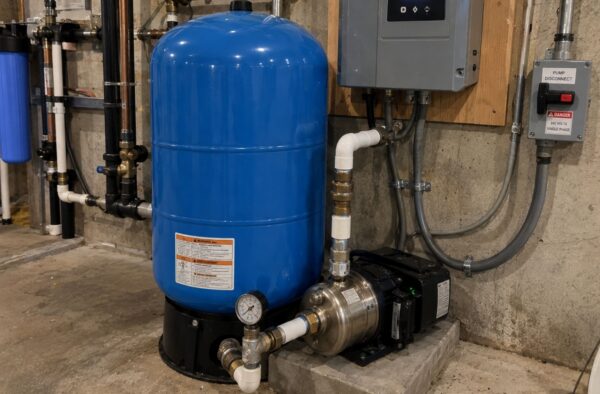
Homes on private wells common throughout Fairfield County outside city centers rely on a pressure tank rather than a municipal PRV. The tank cycles the pump on and off between a low and high pressure setpoint, typically factory-set around 40/60 psi.
A waterlogged tank — one that’s lost its internal air cushion — causes the pump to short-cycle and pressure to sag noticeably. Checking and recharging tank air pressure is something a homeowner can learn, but resetting the pressure switch itself is safer left to a plumber since misadjustment can trip the pump’s safety cutoff or cause it to run dry. Our well pump maintenance guide covers the full tank-check routine.
Step 5: Consider a Whole-House Booster Pump
If your municipal supply chronically runs below 40 psi even with everything else ruled out, a booster pump adds mechanical pressure to the whole system. This is common in homes at the end of a long municipal line or on a hill, situations we see in parts of Ridgefield and New Fairfield.
Booster pump installation involves electrical work, backflow prevention, and correct sizing for your household’s peak demand — this is licensed-plumber territory, not a weekend project.
Step 6: Replace a Failing Well Pump
If pressure has been declining for months, the pump cycles constantly, or you hear the motor straining, the well pump itself may be wearing out rather than just needing a tank adjustment. Submersible well pumps typically last 8-15 years, and pumps working overtime to compensate for other issues wear out faster.
Swapping a well pump means pulling the drop pipe and wiring from the well casing, which requires specialized equipment and is not a DIY job. See our guide on signs of well pump failure to check whether replacement is actually warranted before spending on it.
What NOT to Do
Don’t crank the PRV adjustment bolt as far as it’ll go hoping for more pressure — pushing past 80 psi risks blown supply lines, leaking washing machine hoses, and premature wear on every appliance in the house. Don’t remove flow restrictors from showerheads as a workaround either; that’s treating a symptom while ignoring whatever’s actually restricting flow upstream.
And don’t attempt well pump or pressure tank electrical work yourself. These circuits often run on 240V, and a mistake can damage the pump motor or create a genuine safety hazard.
We’d also caution against stacking fixes without retesting between each one. If you clean an aerator, adjust the PRV, and swap a showerhead all in the same afternoon without checking pressure in between, you won’t know which change actually worked — and you might overcorrect past a safe pressure without realizing it.
How Fairfield County Homes Complicate the Fix
Older housing stock throughout Danbury, Bethel, and surrounding towns often mixes galvanized steel sections with newer copper or PEX repiping done over the decades, and pressure problems in these homes sometimes trace back to a narrow, corroded section buried in a wall rather than anything at the fixture or valve level. In those cases, no amount of aerator cleaning or PRV adjustment fixes the underlying restriction — the corroded section needs to be identified and replaced.
Clay soil common across the region also shifts seasonally, which can gradually kink or stress buried supply lines running from the street or well to the house. If your pressure issue coincided with a particularly wet spring or a summer of heavy clay expansion and contraction, a buried line issue is worth ruling out before assuming it’s something simpler inside the house.
When to Call a Licensed Plumber
Cleaning aerators and checking valves are safe for any homeowner. Once the fix involves adjusting a PRV you’re not confident about, touching well pump wiring, or installing a booster pump, call a licensed plumber. Misadjusting pressure equipment tends to trade one problem for a worse one — either burst fixtures from overcorrecting, or a pump that fails early from being run incorrectly.
Frequently Asked Questions
Can I adjust my water pressure regulator myself?
Small adjustments with a wrench on the PRV’s adjustment bolt are within reach for a comfortable DIYer, but always retest with a gauge afterward and never push above 80 psi. If the valve won’t hold a setting, it needs professional replacement.
How much does it cost to install a booster pump?
Costs vary based on the pump size and plumbing complexity of the install, and this is a job best quoted after a plumber evaluates your specific supply pressure and household demand.
Will a new showerhead really improve pressure?
Yes, if the old one is clogged with mineral scale or has a worn flow restrictor. It won’t fix a whole-house pressure problem, but it solves single-fixture weak flow instantly.
How do I know if my pressure tank needs recharging?
Signs include the pump cycling on and off rapidly, pressure that surges then drops, or a tank that sounds waterlogged (sloshing rather than a solid thump) when tapped.
Is 80 psi too high for a house?
Yes — 80 psi is the maximum allowed under most plumbing codes before a PRV is required, and pressure above that accelerates wear on pipes, valves, and appliances.
What’s the ideal water pressure for a house?
Most plumbers and the EPA’s WaterSense program target 45-60 psi as the sweet spot for comfortable flow without stressing your plumbing system.
Need Help Now?
Ready to get your pressure back to normal without guesswork? Call All State Plumbing Pros for same-day service across Danbury, Bethel, and the rest of Fairfield County — we’re available 24/7 for emergencies. Contact us today and we’ll diagnose it right the first time.
Frequently Asked Questions
See FAQ block above.