Sump Pump Installation Cost in Connecticut (2026 Guide)
Sump pump installation costs typically range from $500 to $3,000, with a standard residential job in the $1,200 to $2,500 range once labor, the pump unit, and basic hookup are included. The final number depends mostly on pump type, whether you already have a sump pit, and how far the discharge line has to run.
Basements are common across Fairfield County and Westchester County, and so is the water table that makes them flood. In Danbury, New Milford, and Ridgefield, older foundations and heavier spring rainfall push a lot of homeowners toward sump pump installation for the first time. In Wilton and Bethel, rural lots with well systems often pair a sump pump with existing crawl space drainage.
If you’re comparing pump types, sump pit condition, and battery backup add-ons, All State Plumbing Pros installs and services sump pumps throughout Connecticut and Westchester County. Our residential plumbing team handles everything from a straightforward unit swap to a full new sump pit. Here’s what actually drives the cost, based on pricing benchmarks from Angi’s 2026 sump pump installation cost data and our own field experience.
How Much Does It Cost to Have a Plumber Install a Sump Pump?
Professional sump pump installation runs $500 to $3,000 depending on the pump type and job complexity. A simple unit replacement in an existing sump pit typically costs $500 to $1,200. A standard residential sump pump installation, meaning a new pump plus basic setup, usually lands between $1,200 and $2,500. Complex installations, including new sump pit excavation or extended discharge piping, can run $1,000 to $2,500 on top of the unit itself.
Typical sump pump installation costs by pump type:
| Pump Type | Unit Cost | Typical Lifespan |
| Pedestal sump pump | 80–800 | 10–30 years |
| Submersible pump | 90–1,000 | 5–15 years |
| Water-powered backup pump | 200–900 | 15–20 years |
| Crawl space pump | 150–1,200 | 10–20 years |
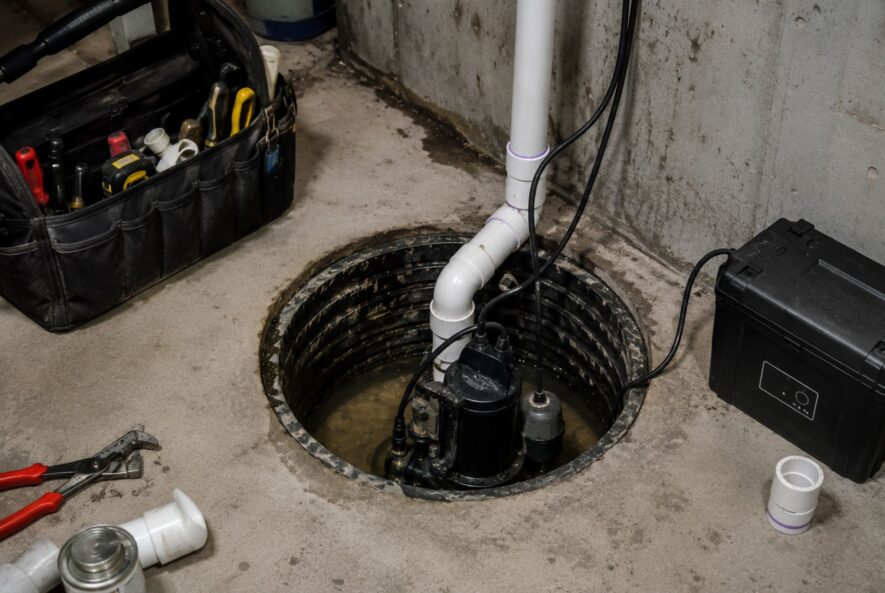
A submersible sump pump sits inside the sump basin itself and runs quieter, which makes it the better choice in finished basements or areas with significant water intrusion. A pedestal sump pump keeps its motor above the sump pit, so it’s easier to service and tends to last longer, though it runs louder and takes up more visible space.
Labor costs for sump pump installation run $45 to $150 per hour. Installing a new sump pit, when one doesn’t already exist, adds $500 to $1,000 for excavation and concrete cutting, plus $300 to $1,000 more if the pit itself needs to be dug out from scratch. A battery backup system adds $300 to $800 to the total installation cost, and electrical work for a dedicated outlet or wiring can run another $150 to $500.
Do You Need a Plumber to Install a Sump Pump?
For a straightforward pump replacement in an existing pit, no, not necessarily. Replacing an existing sump pump with a similar model is a manageable DIY project for someone comfortable with basic plumbing and electrical connections. DIY installation can save $150 to $300 in labor costs compared to hiring a pro.
New pit installation is a different story. Cutting into a concrete basement floor, tying into drainage lines, and routing a new discharge line requires specialized equipment and experience most homeowners don’t have. Mistakes here (a poorly sealed pit, an undersized discharge pipe, a check valve installed backward) can lead directly to basement flooding, which defeats the entire purpose of the pump. If your installation involves a new sump pit, new drainage lines, or you’re not confident working with electrical connections near water, professional installation is worth the added cost.
What Drives Sump Pump Installation Costs Up or Down
A few factors explain most of the price spread between a $500 job and a $3,000 one.
- Pump type and horsepower. A 1/3 HP submersible pump, which handles up to 2,000 GPH, costs less than a higher-horsepower unit sized for a larger sump basin or heavier water volume.
- New pit vs. existing pit. Replacing a pump in an existing sump pit is the cheapest scenario. A new pit installation adds excavation, concrete cutting, and drainage tie-in work.
- Discharge line complexity. How far the discharge pipe has to run, and whether it needs to go through an exterior wall or under a driveway, significantly affects installation costs.
- Battery backup systems. A backup system that keeps the pump running during a power outage adds real cost but also real protection, since most sump pump failures happen during heavy storms when the power is most likely to go out.
- Permits. Sump pump installation permits are municipality-specific in Connecticut and can vary widely in cost between towns.
- Basement waterproofing. If drainage or waterproofing work is bundled into the same project, it can significantly increase the total beyond the pump installation itself.
Battery Backup Systems: Worth the Extra Cost?
A battery backup sump pump system costs $300 to $800 installed and runs on a separate battery when your main pump loses power or fails. Most systems provide 6 to 24 hours of operation depending on the battery, with deep-cycle batteries offering longer runtime than standard ones. The batteries themselves need replacement every 3 to 5 years to stay reliable.
Since power outages and heavy rainstorms tend to happen together, a battery backup system is one of the few sump pump upgrades that pays for itself the first time it’s actually needed.
What Is the Typical Life Expectancy of a Sump Pump?
Most standard sump pumps last 7 to 10 years. Pedestal pumps tend to last longer, often 10 to 30 years, since the motor stays out of the water and away from debris. Submersible pumps typically run 5 to 15 years, with cast-iron models lasting toward the upper end of that range and entry-level thermoplastic units sometimes falling short of 7 years. Routine maintenance, meaning testing the float switch and clearing the sump pit of debris, is what pushes a pump toward the longer end of its expected lifespan rather than the shorter one. Our sump pump maintenance guide walks through the seasonal checks worth doing yourself, and This Old House’s sump pump cost guide is a useful second opinion if you’re comparing quotes from multiple contractors.
Is It a Red Flag If a House Has a Sump Pump?
No. A sump pump is common in homes across Fairfield County and Westchester County, especially in older houses, homes with finished basements, or properties on lower ground where groundwater naturally collects. Having a sump pump usually means a previous owner addressed a water management issue proactively, not that the home has an unresolved problem.
That said, it’s reasonable to ask a seller or inspector how often the pump runs, whether the home has flooded in the past, and how old the current pump is. A sump pump that runs constantly, or one nearing the end of its 7 to 10 year lifespan, is worth factoring into your plumbing budget even if it isn’t a defect on its own.
Conclusion
Sump pump installation cost depends mostly on whether you’re replacing an existing unit or starting from scratch with a new pit, and whether you add a battery backup for storm protection. A simple replacement can run as little as $500, while a full new installation with excavation and backup power can reach $3,000. Knowing the pump types, the labor involved, and the maintenance that extends a pump’s lifespan helps you budget accurately instead of guessing.
If you’re dealing with a failing sump pump, planning a new installation, or want a battery backup system added before the next storm, All State Plumbing Pros installs and services sump pumps across Fairfield County and Westchester County, including Danbury, New Milford, Ridgefield, Wilton, and Bethel. Contact us today for an upfront quote on your sump pump installation.
FAQs
How much does it cost to have a plumber install a sump pump?
Professional sump pump installation typically costs $500 to $3,000, with most standard residential jobs falling between $1,200 and $2,500. The exact price depends on the pump type, whether a new sump pit is needed, and how far the discharge line runs.
Do you need a plumber to install a sump pump?
Not always. Replacing a pump in an existing sump pit is a manageable DIY project for someone comfortable with basic plumbing and electrical work. Installing a brand new sump pit or discharge line is better left to a professional, since mistakes can lead to basement flooding.
What is the typical life expectancy of a sump pump?
Most sump pumps last 7 to 10 years. Pedestal pumps often last longer, from 10 to 30 years, while submersible pumps typically last 5 to 15 years depending on build quality and usage.
Is it a red flag if a house has a sump pump?
No. Sump pumps are common in Connecticut and Westchester County homes, particularly older houses and those with finished basements. It’s worth asking about the pump’s age and flooding history, but the presence of a sump pump alone isn’t a warning sign.