Gas vs. Electric Water Heater: Which Is Right for Your Home?
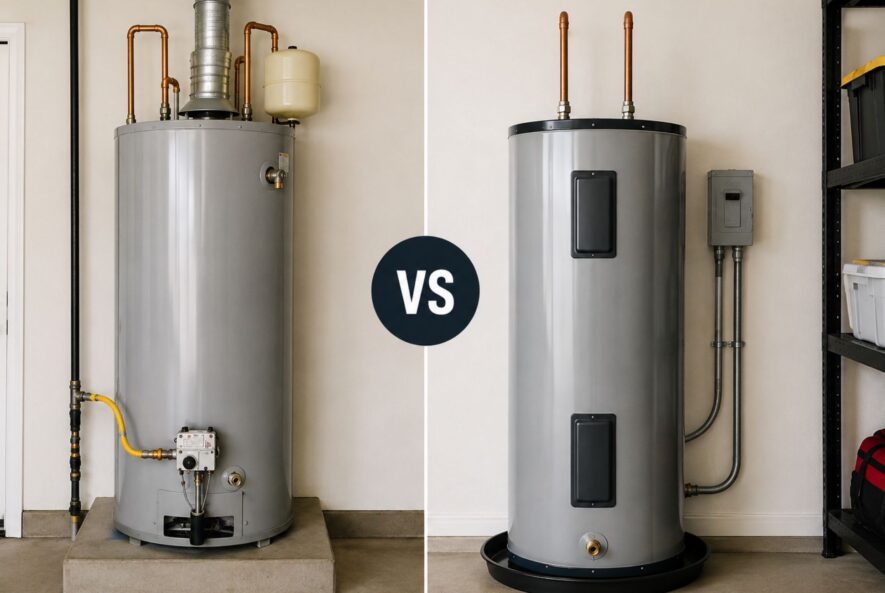
Gas and electric water heaters both do the same job, but they get there differently, and the right choice depends on your existing utility hookups, household hot water demand, and how much you’re willing to spend upfront versus over time. Gas water heaters generally recover hot water faster and cost less to install if you already have a gas line. Electric water heaters are more energy efficient at converting fuel to heat and last a few years longer on average.
Homeowners across Fairfield County and Westchester County split fairly evenly between the two, largely based on what’s already running to the house. In Danbury and New Milford, older homes with existing gas service tend to stick with gas water heaters. In more rural pockets of Ridgefield and Wilton, homes without a gas line often default to electric rather than pay for a new gas connection.
If you’re deciding between the two, or your current unit is failing, All State Plumbing Pros installs and services both gas and electric water heaters throughout Connecticut and New York.
Which Water Heater Is Better, Gas or Electric?
Neither type is universally better. Gas water heaters heat water faster and perform better for larger households with high simultaneous hot water demand, since gas burners recover 20 to 45 gallons per hour depending on tank size and BTU input, compared to 18 to 20 gallons per hour for electric units. Electric water heaters are more energy efficient overall, converting 90 to 95% of the electricity they use into heat, while gas units lose 30 to 40% of their energy through venting.
Key differences at a glance:
| Factor | Gas Water Heater | Electric Water Heater |
| Recovery rate | 20–45 gallons/hour | 18–20 gallons/hour |
| Energy efficiency | Loses 30–40% through venting | Converts 90–95% to heat |
| Average lifespan | 6–12 years | 10–15 years |
| Installation cost | 600–800 | 500–600 |
| Works during power outage | Often yes, with a pilot light model | No |
| Requires gas line and venting | Yes | No |
Is It Cheaper to Run a Gas or Electric Water Heater?
It depends on local utility rates, which vary between Connecticut and New York and even between towns. Gas is often the cheaper fuel per unit of energy, but electric water heaters use that energy more efficiently, converting nearly all of it into heat rather than losing a third of it through the vent. The net result is that operating costs between gas and electric units are often closer than the sticker price on installation suggests. Comparing your actual utility rates for natural gas and electricity locally is the only reliable way to know which will cost less to run in your specific home.
Installation Costs and Switching Between Fuel Types
Electric water heaters typically cost $500 to $600 to install, while gas water heaters run $600 to $800, assuming an existing gas line is already in place. Switching fuel types costs considerably more than a straight replacement:
- Switching from gas to electric costs about $1,500, since it usually requires capping the old gas line and adding electrical capacity.
- Switching from electric to gas costs about $2,000, since it typically requires running a new gas line and adding proper venting.
If your current setup already matches your preferred fuel type, sticking with it is almost always the cheaper path. For a full cost breakdown by tank size and installation type, see our guide on what a new water heater costs to install.
Energy Efficiency and Long-Term Costs
Electric water heaters are generally more energy efficient than gas models, converting the large majority of electricity used directly into heat, a distinction ENERGY STAR’s water heater efficiency criteria also use to set certification standards. Gas water heaters lose a meaningful share of their energy through the venting process, since combustion byproducts have to be exhausted outside the home. Heat pump water heaters, a newer electric option, can be 2 to 3 times more efficient than a standard electric unit by pulling ambient heat from the surrounding air instead of generating it directly, though they cost more upfront and work best in moderate climates.
Maintenance Requirements for Each Type
Gas and electric water heaters both need regular upkeep, but the specifics differ:
- Gas water heaters require annual venting system inspections to make sure combustion gases are exhausting safely, and generally have higher maintenance costs due to more complex parts like the gas valve and pilot assembly.
- Electric water heaters need heating element replacement roughly every 8 to 10 years, which is a simpler and usually cheaper repair than most gas-side issues.
- Both types benefit from annual tank flushing to clear sediment buildup, and both need the anode rod replaced every few years to prevent internal corrosion.
Regular maintenance is what determines whether your water heater lasts toward the top or bottom of its expected lifespan. Our water heater maintenance guide covers the full checklist.
Which Handles High Demand Better?
For households running back-to-back showers, a dishwasher, and a washing machine around the same time, gas water heaters generally hold up better. Their faster recovery rate means less waiting for hot water to replenish between uses. Electric heaters take longer to recover, which can leave a larger household running short during peak usage hours, particularly with an undersized tank.
Why Do Plumbers Not Always Recommend Tankless Water Heaters?
Plumbers don’t universally avoid tankless units, but they’re often more cautious recommending them than gas or electric tank models for a few practical reasons, several of which the Department of Energy’s overview of tankless water heaters also flags: higher upfront installation cost, the need for gas line or electrical upgrades in many homes, sensitivity to hard water without a softener, and flow rate limits that can struggle with simultaneous high-demand use in larger households. None of that makes tankless a bad option, but it does mean it’s not automatically the right fit for every home the way a standard tank replacement usually is. If you’re weighing tankless against a traditional tank, our guide on tankless vs. tank water heaters breaks down the tradeoffs in more depth.
Is It Worth Switching From Gas to Electric Water Heater?
For most homeowners, switching fuel types purely for the sake of switching isn’t worth the roughly $1,500 to $2,000 cost unless there’s a specific driver, like losing access to gas service, wanting to eliminate combustion risks and carbon monoxide concerns entirely, or planning around solar panels that make electric operating costs more attractive. If your current fuel type is working fine and you’re simply replacing an aging unit, a like-for-like replacement is almost always the more cost-effective choice.
Conclusion
Gas and electric water heaters both reliably heat a home’s water supply, and the better choice comes down to what’s already installed, how much hot water your household uses at once, and how you weigh upfront cost against long-term efficiency. Gas recovers faster and suits high-demand households. Electric is more efficient, lasts longer on average, and skips the venting and gas line entirely.
If you’re replacing a failing water heater or deciding between fuel types for a new installation, All State Plumbing Pros installs and services both gas and electric water heaters across Fairfield County and Westchester County. Contact us today for a straightforward recommendation based on your home’s setup.
FAQs
Which water heater is better, gas or electric?
Neither is universally better. Gas water heaters recover hot water faster and suit larger households with high demand. Electric water heaters are more energy efficient and typically last longer, from 10 to 15 years compared to 6 to 12 for gas.
Is it worth switching from gas to electric water heater?
Usually not, unless there’s a specific reason like losing gas service access or wanting to eliminate combustion risks entirely. Switching costs around $1,500 to $2,000, so a like-for-like replacement is typically more cost-effective.
Why do plumbers not recommend tankless water heaters more often?
It’s not that plumbers avoid recommending them, but tankless units come with higher upfront costs, potential gas line or electrical upgrades, hard water sensitivity, and flow rate limits that make them a better fit for some homes than others.
Is it cheaper to run a gas or electric water heater?
It depends on local utility rates for gas and electricity, which vary by town in Connecticut and New York. Gas is often the cheaper fuel per unit of energy, but electric units convert more of that energy into usable heat, which narrows the real-world cost difference.