Complete Well Pump Maintenance Guide for Homeowners
A dependable well pump system ensures your home’s water supply stays clean, steady, and reliable year-round. Without regular well pump maintenance, small issues like corrosion, mineral buildup, or faulty wiring can lead to major system failures that disrupt your access to drinking water. Proper pump maintenance keeps every component, from the pressure tank to the pressure valve, working efficiently and safely.
For homeowners across Fairfield County, CT, and Westchester County, NY, All State Plumbing Pros provides 24/7 service specializing in well pump inspection, repair, and routine maintenance. Our licensed professionals make sure your pressure switch, well casing, and submersible pump stay in good condition.
Schedule your annual maintenance today through our Well Pump Service page.
Why Well Pump Maintenance Is Important
Regular well pump maintenance ensures your water well system remains in good shape, extending its life span and improving system performance. Most well pumps last between 8 and 15 years, but that depends on proper care. Over time, poor well construction, sediment buildup, or exposed wires can affect water pressure, efficiency, and safety.
Homeowners often don’t notice problems until low water pressure, odd noises, or discolored water appear. However, routine maintenance prevents these issues by keeping your mechanical components, like the pressure tank, valve, and pipes, in top condition.
Ignoring early signs can cause wear and tear that leads to costly pump replacement. Local conditions in Connecticut and New York, such as hard water and freezing temperatures, can also accelerate corrosion. Scheduling regular maintenance keeps your water pump running smoothly and protects your energy investment.
If your system hasn’t been inspected recently, our Residential Plumbing team can perform a full diagnostic review to ensure your well system functions reliably.
How Often Should You Service Your Well Pump?
Experts recommend scheduling a professional inspection of your well pump at least once a year. Regular servicing helps detect faulty well pumps, low water pressure, or leaks before they escalate into significant issues.
- Submersible pumps should be serviced annually because they operate underwater and are prone to mineral buildup.
- Above-ground pumps or jet models need servicing every 2–3 years to check seals, pressure valves, and motor performance.
Annual maintenance should include testing water quality, checking the pressure switch, and ensuring proper water flow. For homeowners in Danbury and Ridgefield, winter inspections are critical to prevent frozen pipes and maintain consistent pressure.
Step-by-Step Well Pump Maintenance Checklist
A clear maintenance schedule helps keep your well system reliable. By following regular inspection steps, you can reduce wear and tear and maintain system efficiency.
Monthly Visual Checks
Inspect the wellhead, pipes, and surrounding area for cracks, leaks, or standing water. Make sure your well cap is sealed properly to prevent contaminants from entering the system. Listen for unusual noises that could signal a mechanical imbalance or air in the line.
Keep the space around the wellhead clear of debris and dirt, and avoid storing chemicals or fuel nearby. These steps protect your water quality and prevent contamination.
Quarterly Maintenance
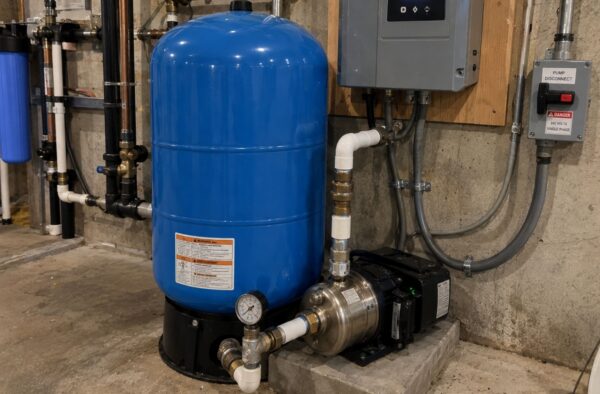
Every few months, inspect your pressure tank and pressure gauge to ensure they function properly. The gauge should read between 40–60 PSI for stable water pressure.
Clean sediment filters and strain the water treatment system to remove buildup. Check valves, connectors, and fittings for corrosion or leaks, as these can affect water flow and system performance.
Annual Professional Inspection
Hire a licensed professional once a year to perform a full inspection of your water system. This includes:
- Testing the pressure switch and circuit breaker.
- Checking for exposed wires or faulty connections.
- Measuring water level, flow rate, and air pressure in the bladder tank.
- Conducting water testing for bacteria, lead, or other contaminants.
| Component | Frequency | Inspection Focus |
| Wellhead | Monthly | Check for cracks, leaks, and vegetation |
| Pressure Tank | Quarterly | Verify PSI, inspect for corrosion |
| Pressure Switch | Annual | Test cycling and electrical response |
| Filters/Strainers | Quarterly | Clean sediment and debris |
| Wiring | Annual | Inspect for corrosion and exposed wires |
| Water Test | Annual | Check for bacteria, lead, and nitrates |
If you discover irregularities such as low pressure, discolored water, or vibration, contact a professional immediately. Schedule a Well Pump Service appointment to ensure your system stays in good condition.
Common Problems Prevented by Routine Maintenance
Consistent well pump maintenance prevents small issues from becoming costly breakdowns. Neglecting routine checks can cause short cycling, low water pressure, and pump failure. Proper maintenance also extends the life span of your system and improves energy efficiency.
- Pressure tank issues: Early detection of corrosion prevents damage to the tank and connected valve system.
- Clogged filters: Cleaning filters maintains smooth water flow and reduces strain on your mechanical components.
- Electrical problems: Routine inspections detect exposed wires or faulty connections before they affect performance.
- Sediment buildup: Prevents damage from debris and keeps drinking water safe.
In areas like Wilton and New Milford, winter temperatures can cause pipes to freeze, affecting water flow. By maintaining your system year-round, you can protect it from both environmental and internal stress.
DIY Well Pump Maintenance Tips
Between professional visits, homeowners can perform simple tasks to keep their well system running smoothly.
Keep the well cap area clean and sealed tightly. Record each inspection in a maintenance log, noting water quality, pressure readings, and any irregular noises. To avoid unnecessary strain, spread out high water usage throughout the day and check your pressure gauge regularly.
Insulate pipes and the wellhead during winter to prevent freezing, and ensure your pressure valve and pressure tank remain at correct PSI levels. Always disconnect electrical power before handling any mechanical components or wiring to prevent accidents.
Professional Well Pump Service: What to Expect
A professional inspection covers every element of your well pump system to verify performance and safety.
During maintenance, technicians will:
- Test pressure switches and gauge accuracy.
- Inspect mechanical components like valves, tanks, and pipes for leaks or corrosion.
- Check the flow rate and ensure the water pump runs efficiently.
- Perform water testing for quality assurance.
At All State Plumbing Pros, our experts specialize in pump troubleshooting, pressure tank calibration, and water quality treatment. We serve homeowners across Fairfield County and Westchester County, offering dependable solutions that keep systems in good shape.
To schedule a same-day visit, book through our Well Pump Service page.
Cost of Well Pump Maintenance vs. Repair
Keeping a consistent maintenance schedule is far more affordable than facing a breakdown. Regular maintenance typically costs $150–$300, while a full pump replacement can range from $975–$2,750.
| Service Type | Average Cost | Downtime | Key Benefit |
| Routine Maintenance | $150–$300 | None | Extends pump life |
| Minor Repairs | $400–$800 | 1–2 days | Fixes leaks and worn parts |
| Pump Replacement | $975–$2,750 | 2–3 days | Restores full performance |
With proper care, your system can operate efficiently for over a decade while maintaining excellent water quality.
Signs It’s Time to Call a Professional
Even a well-maintained system can develop issues that require immediate attention. Watch for these signs:
- Low water pressure or erratic flow.
- The pump is running constantly or cycling too frequently.
- Sputtering faucets that release air with water.
- Tripped circuit breakers or strange noises from the tank.
In such cases, contacting a licensed professional is the best course of action. All State Plumbing Pros provides 24/7 Emergency Plumbing services to restore water flow quickly and safely.
Conclusion
Consistent well pump maintenance protects your home’s water system, improves energy efficiency, and keeps your drinking water safe from contamination. A regular maintenance schedule helps prevent costly failures and keeps your pump, pressure tank, and valves running smoothly.
If your well pump is making strange noises, showing signs of low water pressure, or running constantly, it’s time to schedule a professional inspection. All State Plumbing Pros offers 24/7 well pump maintenance and repair throughout Connecticut and New York. Our licensed technicians specialize in diagnosing pressure tank issues, repairing faulty pressure switches, and restoring consistent water flow. Whether you need quick troubleshooting or complete pump replacement, we’re here to protect your water supply and prevent costly damage. Contact us today for reliable, same-day well pump service.
FAQs
How often should you flush a well?
Flushing your well annually removes sediment, mineral buildup, and contaminants from your well casing and pipes. This process improves water quality and helps the pump operate efficiently. Always hire a licensed professional for safe, complete flushing.
How to lubricate a well pump?
Most modern submersible pumps don’t need lubrication. However, above-ground pumps may require oiling of bearings. Refer to your manual or schedule service with a professional to avoid over-lubrication or damage.
What maintenance does a water pump need?
Basic water pump maintenance includes inspecting pressure tanks, cleaning filters, checking valves, and testing water pressure. Consistent maintenance keeps your well system free of debris, corrosion, and leaks.
How to tell if a well pump needs to be replaced?
If your system shows low water pressure, constant cycling, or visible rust on components, your pump may be failing. The average life span of a well pump is 8–15 years. A professional inspection determines whether a new pump is needed.